Vinh Experiences Record Rainfall of 399mm, Causing Flooding
Vinh has recorded a staggering 399mm of rainfall, surpassing the previous September record set 41 years ago.
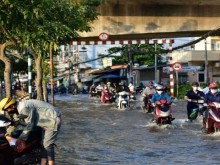
On September 19, Vinh faced significant flooding after receiving 399 mm of rain, surpassing the previous September record of 387.9 mm set in 1985. The heavy downpour caused many streets in the city center to be submerged, with water levels reaching 30-60 cm. However, as the rain subsided in the afternoon, the water began to recede rapidly, and by around 11 PM, most main roads were clear, leaving only 10-15 cm of water in some low-lying areas.
By the morning of September 20, Vinh's streets were largely accessible again. Local businesses that had been affected by the flooding quickly resumed operations. However, the basement of the GreenView 2 apartment building on Hoang Nghia Luong Street remained flooded with nearly 2 meters of water due to a blockage caused by a pickup truck.
Nguyen Xuan Tien, Director of the Nghe An Meteorological and Hydrological Center, noted that the rainfall intensity was extreme, particularly between 10 AM and 11 AM when 145 mm was recorded in just one hour. This intensity contributed to the rapid flooding in many areas. The Vinh meteorological station, located on Le Hong Phong Street, is the only rainfall measurement point in the region and represents data for a 10 km radius.
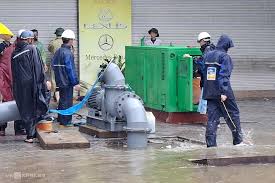
During the storm, several streets, including Tran Phu, Phan Boi Chau, and Nguyen Van Cu, experienced significant flooding, with some vehicles stalling due to the water. Fortunately, the drainage systems and pumping stations in Vinh were activated to manage the excess water. Three main pumping stations—Ben Thuy, Cua Nam, and Cau Den—operated continuously, each capable of pumping 20,000 m3 of water per hour.
Hoang Quoc Truong, Director of the Road Maintenance Management Board, explained that the speed of water drainage in Vinh depends on several factors, including the drainage system, terrain, river water levels, and tidal conditions. The recent dredging of canals and drainage systems has significantly improved water flow, allowing for quicker drainage compared to previous heavy rain events.
Despite the improvements, the current drainage system was designed based on older urban layouts and may struggle with extreme rainfall events. If rainfall increases by 20-30%, flooding could become more severe in certain areas. The construction department is now planning to enhance the capacity of the pumping stations and reassess drainage directions to better handle future storms.