Quang Ninh Completes Land Clearance for $5 Billion High-Speed Rail Project
In Quang Ninh province, two out of seven districts have completed land clearance for the $5 billion
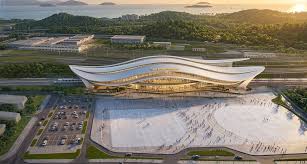
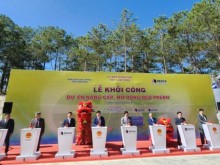
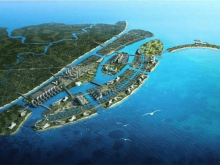
Quang Ninh province is making significant strides in the land clearance process for the Hanoi-Quang Ninh high-speed rail project, which has a total investment of over $5 billion. The project, initiated on April 12, 2026, aims to create a 120 km rail line that will connect the national exhibition center in Hanoi to the public park area in Tuần Châu, Quang Ninh.
The section of the rail line that runs through Quang Ninh is the longest, spanning over 39 km and passing through seven districts: Mạo Khê, Hoàng Quế, Yên Tử, Uông Bí, Đông Mai, Hà An, and Tuần Châu. The total area required for land clearance is approximately 273.13 hectares, with 156.22 hectares designated specifically for clearance. As of now, Quang Ninh has successfully cleared 43.47 hectares, which is about 28% of the total required area.
So far, the districts of Mạo Khê and Tuần Châu have completed their land clearance tasks. The project is expected to be completed by 2028 and will feature a standard gauge of 1,435 mm, electrification, and a design speed of 350 km/h. The section through Hanoi will have a lower design speed of 120 km/h.
There will be five stations along the route, including Cổ Loa, Gia Bình, Ninh Xá, Yên Tử, and Hạ Long Xanh, with a depot located at Hạ Long Xanh station. The project will require an investment in 16 train sets, each consisting of 7-8 carriages with a capacity of over 600 passengers.
The operational hours for the trains will be from 6:00 AM to midnight, with plans for increasing frequency over the years. By 2028, the train frequency will be every 60 minutes during peak hours, reducing to 12 minutes by 2045 during peak times. Maintenance will occur from midnight to 6:00 AM to ensure the infrastructure and vehicles are in optimal condition.
To construct the rail line, approximately 4 km will be elevated above ground, while the remaining 116 km will be on elevated structures, including bridges over rivers and roads. Major infrastructure will include bridges spanning various rivers and roads, ensuring smooth connectivity throughout the region.