Lao Cai - Hanoi - Hai Phong Railway Project Sees Major Funding Increase
The Lao Cai - Hanoi - Hai Phong railway project has seen its investment budget increased by over 86 trillion
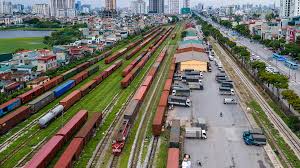
The Lao Cai - Hai Phong railway project is undergoing adjustments regarding its electrification strategy. In a report presented to the National Assembly ahead of a vote, the Ministry of Construction explained the technology adjustments for the railway project connecting Lao Cai, Hanoi, and Hai Phong. The main line and the section from Yen Vien to Gia Lam will still be electrified, while branch lines connecting to the ports will initially utilize diesel engines. This approach aims to save costs and facilitate cargo handling, with a plan to transition to clean energy before 2050.
Some representatives have called for a clear timeline for the transition and clarification on the technology to be used for branch lines not connecting to ports. The Ministry noted that previous feasibility studies suggested full electrification for both the main line and branch lines. However, the overhead electrical systems at cargo stations could impede loading and unloading operations, making electric locomotives less suitable.
Subsequent research indicated that diesel engines are capable of efficiently managing cargo on these branch lines. Consequently, consultants proposed utilizing existing diesel locomotives, which align with port operations and reduce initial investment costs. Countries like France, China, and Germany are testing clean fuel locomotives, with commercialization expected around 2030-2035. The Ministry believes that using diesel engines in the short term is appropriate while ensuring a pathway to clean energy.
Two branch lines, Dong Anh - Quan Trieu and Yen Vien - Lao Cai, are currently operated with diesel engines. To ensure consistency and efficiency, these lines will continue using existing technology. The transition to electric locomotives or clean energy will be considered during the upgrade of each line. The Ministry aims to refine the technology plan to be modern, synchronized, safe, and ensure international connectivity.
Additionally, the project aims to increase the localization rate and gradually establish a domestic railway industry. A notable adjustment in the project is the addition of an 8.4 km segment from Yen Vien to Gia Lam, relocating the northern passenger hub from Yen Vien to Gia Lam. This change is intended to align with Hanoi's master plan for the next century and the adjusted railway network plan. The added segment will connect the national railway with Hanoi's metro system, enhancing passenger convenience.
The new passenger hub at Gia Lam is also expected to drive redevelopment in the area, following a transit-oriented development model. These adjustments are projected to increase the investment cost by approximately 21.605 trillion VND. The Lao Cai - Hanoi - Hai Phong railway project, approved by the National Assembly in 2025, will span about 417 km, including 389 km of main line and 27.9 km of branch lines. Under the new plan, the main line will be reduced to 362 km, while branch lines will increase to 62 km. The railway is designed for passenger trains to run at a maximum speed of 160 km/h and freight trains at 120 km/h, with a completion target set for 2030.