Severe Heat Wave Expected in Central Vietnam Over Next Two Days
Central Vietnam is bracing for a severe heat wave over the next two days, with temperatures expected to
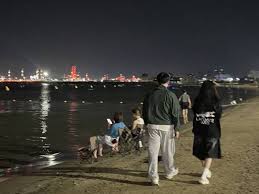
A severe heat wave warning has been issued for the regions of Daegu and Gyeongbuk, with temperatures expected to reach life-threatening levels. The Korea Meteorological Administration reported on July 26 that areas such as Gyeongbuk's Goryeong, Pohang, and Gyeongju, as well as Jeonnam's Gwangyang and Gyeongnam's Yangsan and Uiryeong, could experience a felt temperature of 39 degrees Celsius or higher.
The term 'Daefrica,' a combination of Daegu and Africa, has been used to describe the extreme heat conditions, which have now expanded to include 'Pofrica' (Pohang + Daefrica) and 'Gyeongfrika' (Gyeongsan + Gyeongju). Residents of Daegu and Gyeongbuk are facing a daily battle against extreme heat during the day and tropical nights.
According to the Korea Disease Control and Prevention Agency, from May 15 to July 24, there have been 1,232 reported cases of heat-related illnesses nationwide, with Gyeongbuk reporting 140 cases, the second highest after Gyeonggi Province with 260 cases. On July 12, the first-ever heat wave warning was issued for Pohang, resulting in 14 cases of heat-related illnesses on that day alone.
Since the first tropical night was recorded on July 7, Pohang has experienced 15 consecutive tropical nights, forcing residents to adapt their daily routines in the face of extreme heat. Many flock to the beach for relief, setting up tents and camping chairs to enjoy the sea breeze, while others seek refuge in cooler areas like Jukjang-myeon.
One resident, Mr. Kim (53), expressed, "Living near the beach, relying solely on air conditioning and fans feels like a loss. Thankfully, the night sea breeze helps me endure the heat and tropical nights." The Daegu Weather Center has reiterated warnings about the ongoing strong sunlight, indicating that temperatures will continue to rise. Residents are advised to limit outdoor activities and take necessary precautions.
While there is currently no significant rain in the forecast, there remains a glimmer of hope. Professor Kim Hae-dong from Kyungpook National University suggested in an interview on July 13 that this summer may see a recurring pattern of extreme heat followed by heavy rains. He explained that prolonged periods of extreme heat could lead to a weakening of atmospheric pressure, allowing cooler, dry air from the north to collide with warm air, potentially forming fronts that could bring temperatures down to around 31-32 degrees Celsius and result in rainfall.