Satellite Images Reveal Damage at US Base After Iranian Attack
Recent satellite images have shown significant damage at the Muwaffaq Salti military base in Jordan
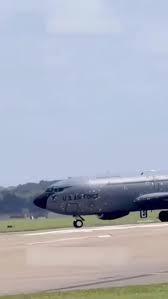
The US Air Force has undertaken an impressive effort to repair a KC-135 tanker aircraft that was damaged during an Iranian attack. In a recent discussion at the Air, Space, and Cyber Conference, General Daniel H. Tulley, head of the Air Mobility Command, revealed new details about the repair process that enabled the aircraft to return safely from the Middle East.
According to General Tulley, the crew was alerted to the attack while preparing for a mission, prompting them to evacuate the aircraft and seek shelter. After the attack, they returned to find the KC-135 smoking and riddled with holes. The aircraft had been fully loaded with fuel at the time of the assault, necessitating a 48-hour operation to drain over 90 tons of fuel before repairs could begin.
The first responders quickly began to seal the holes and repair the aircraft's systems, allowing it to undertake the transatlantic flight back to the United States. General Linda Hurry, head of the Air Force Material Command, noted that her unit was responsible for the on-site repairs of the damaged KC-135s. They utilized high-speed aluminum tape, suitable for temporary repairs, to patch up the aircraft until it could undergo more extensive repairs.
The aircraft was eventually flown back to Tinker Air Force Base in Oklahoma, which is the sole facility responsible for repairing combat-damaged aircraft within the US Air Force. The exact time and location of the attack have not been disclosed, but the Pentagon's Inspector General confirmed that five KC-135s were damaged in the assault on Prince Sultan Air Base in Saudi Arabia.
Images shared on social media showed KC-135s covered in tape at Mildenhall Air Base in the UK, believed to be among those damaged in the attack. General Tulley emphasized the importance of maintaining operational readiness and the challenges of sustaining combat capabilities amid ongoing conflicts. He raised questions about how to improve the Air Force's ability to regenerate forces under enemy fire and ensure readiness during prolonged conflicts.
General Kenneth Wilsbach, commander of the US Air Force, mentioned that multiple maintenance teams and equipment are being deployed to bases in Europe to streamline repairs. This approach allows aircraft to receive maintenance closer to the front lines, enhancing their operational readiness without the need for long flights back to the US.
Military analyst Howard Altman commented that the ability to conduct repairs as close to the frontline as possible will be crucial in future conflicts involving the US and peer adversaries.