Ukraine Launches Record Attack on Russia with Drones and Missiles
Ukraine has reportedly executed its largest long-range strike against Russia since the conflict began,
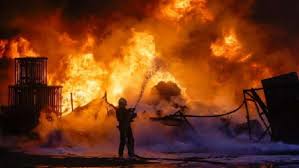
The conflict in Ukraine has entered a perilous phase as Russia escalates its large-scale missile and drone attacks, aiming to overwhelm Ukraine's air defense systems, according to investigators from Ukraine. In a recent strike on Ukrainian industrial facilities, Russia opted for the RM48U missile, a less accurate weapon originally developed for training air defense crews, instead of its primary Iskander ballistic missiles.
This change in tactics allows Russia to ramp up its airstrike campaign while preserving its more powerful missiles for future operations. Official data reviewed by Reuters indicates that over half of the 228 ballistic and hypersonic missiles launched at Ukraine during July and the first eight days of August were RM48Us. In July alone, military analysts recorded 87 launches of RM48U out of a total of 158 attacks, demonstrating Moscow's strategy of using cheaper, less precise weapons to maintain attack volume while reserving sophisticated systems for higher-priority targets.
According to military expert Sidharth Kaushal from the Royal United Services Institute, the RM48U enables Russia to conserve advanced missiles like the Iskander while forcing Ukraine to expend its limited interceptors in anticipation of a more intense ballistic campaign as winter approaches. The number of Iskander missiles used in July dropped to 38, compared to over 100 the previous month, indicating a layered approach where less accurate systems exert significant pressure on enemy air defenses.
The RM48U, launched from Russia's S-400 systems, travels at high speeds along a ballistic trajectory but lacks the power and precision of the Iskander, with an average target deviation of about 300 meters and a warhead that disperses metal fragments over a wide area. The scale of Russia's attack campaign has surged, with July recording the highest number of ballistic and hypersonic missile strikes since the conflict began in 2022, totaling 158 attacks (including 87 RM48U launches), and continuing with 70 attacks in the first eight days of August.
This offensive coincides with Ukraine's long-range drone strikes targeting Russian oil facilities and vessels. The humanitarian toll has been severe, with the United Nations reporting 437 civilian deaths in Ukraine during July, the highest since the war began. However, the Russian Defense Ministry asserts that it targets military infrastructure and drone component storage, declining to comment on the RM48U.
Estimates from the Institute for the Study of War suggest that Russia has around 100 Iskander missiles compared to 400 RM48Us, alongside other missile types like North Korean KN-23, KN-24, and hypersonic weapons such as Zircon and Kinzhal. Kaushal estimates that Russia produces about 750 Iskander missiles annually, constrained by solid-fuel rocket engine limitations. The Ukrainian Intelligence Directorate reports that Russia plans to double RM48U production to 480 missiles this year.
For Ukraine, the significant challenge lies in its diminishing intercept capabilities, as it has nearly exhausted its stock of American-made Patriot missiles. This shortage is exacerbated by increased demand from conflicts involving Iran. President Volodymyr Zelensky continues to call for Patriot system assistance following attacks on August 5, emphasizing that interceptor missiles could save many lives. As the next winter approaches, Russia's strategy of combining low-cost RM48Us with advanced hypersonic weapons forces Ukraine into a difficult dilemma: expend scarce interceptors on minor threats or conserve them for more dangerous targets. The addition of air defense systems is now crucial for the future of the conflict.