Russia Strikes Ukrainian UAV and Missile Production Facility
Russia has launched an attack on a Ukrainian facility responsible for the production of unmanned aerial
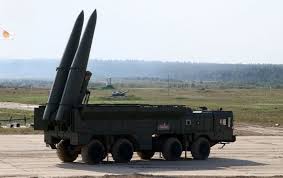
In a significant escalation in the ongoing conflict, Russia has reportedly deployed an upgraded version of its Iskander missile, referred to as the Iskander-1000, against Ukraine. According to the Ukrainian Defense Intelligence Agency, this missile was first used during a large-scale attack on Kyiv this summer, marking a new phase in Russia's military strategy.
The Iskander-1000 boasts a range of 550 kilometers, an improvement over its predecessor, the 9M723-1, which had a range of 390 kilometers. This upgrade allows Russian forces to strike deeper into Ukrainian territory while potentially relocating launch platforms further back from the front lines to avoid detection by Ukrainian drones.
Experts suggest that the introduction of this missile is part of Russia's strategy to increase pressure on Ukraine during potential negotiations. The upgraded missile is equipped with a larger engine and enhanced launch systems, making it a formidable weapon in night-time attacks, which have become a hallmark of Russian operations.
Kostiantyn Kryvolap, an aviation expert, noted that while the upgraded Iskander missile presents a more significant threat, the difficulty of intercepting it remains largely unchanged. The missile flies at a medium altitude of around 50 kilometers and can maneuver within 300-400 meters of its intended trajectory, complicating interception efforts.
Ukrainian air defense systems, particularly the Patriot missile systems, have struggled to counter the Iskander due to a shortage of interceptors. As a result, Ukraine has been focusing on targeting Russian launch platforms to mitigate the threat before it can be deployed.
With the Iskander-1000 in play, the dynamics of the conflict are shifting, as Russia seeks to leverage its upgraded capabilities against a backdrop of ongoing military and strategic challenges.