E10 Gas Prices Rise Nearly 1,000 VND Per Liter
Gasoline prices in Vietnam have seen a significant increase, with E10 gasoline rising by nearly 1,000 VND
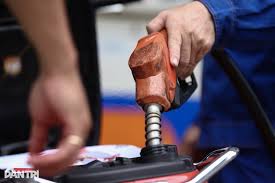
From 3 PM on September 17, fuel prices in Vietnam have sharply increased. The price of gasoline rose by 1,390 to 1,400 VND per liter, while diesel saw an increase of more than 1,400 VND per liter, approaching 30,000 VND per liter. This adjustment was announced by the Ministry of Industry and Trade and the Ministry of Finance.
The new prices set the retail price of E5 RON 92 gasoline at 25,130 VND per liter and E10 RON 95 gasoline at 25,630 VND per liter. Similarly, diesel prices have increased by 1,460 VND per liter to reach 29,940 VND per liter, and mazut has been adjusted up by 1,040 VND per liter to 19,190 VND per kilogram.
In this adjustment period, the authorities decided not to draw from the stabilization fund but rather to utilize it, allocating 1,250 VND per liter for gasoline, 2,000 VND per liter for diesel, and 1,250 VND per liter for mazut. This marks the third consecutive increase in domestic gasoline prices, while diesel has seen two consecutive increases.
Despite these increases, the current prices of fuel in Vietnam remain lower compared to those in the surrounding countries. On the global crude oil market, prices fell on September 17, continuing the downward trend from the previous session, following reports that Saudi Arabia is increasing crude oil shipments via Oman. This move has alleviated some concerns about supply disruptions.
However, oil prices still remain above 100 USD per barrel due to ongoing fears of escalating conflicts in the Middle East. Specifically, Brent crude dropped by 1.88 USD (1.8%) to 103.95 USD per barrel, while WTI fell by 1.77 USD (1.7%) to 100.66 USD per barrel. Previously, both types of oil had decreased by approximately 3 USD per barrel on September 16.
The decline in oil prices followed Saudi Arabia's increase in oil exports to Asia through Oman, which has helped mitigate concerns about supply shortages. Oil is being transferred from one vessel to another offshore at the port of Sohar in Oman, partially compensating for supply disruptions caused by attacks on the East-West pipeline.
However, the additional oil only partially offsets the lost production, as two pumping stations on the East-West pipeline remain damaged with no clear timeline for repairs. Earlier, oil prices had surged to a four-month high due to the suspension of export activities at the Yanbu port on the Red Sea and Saudi Arabia's cancellation of several oil shipments to European customers.
The Strait of Hormuz, amidst ongoing conflicts, transports about one-fifth of the world's oil supply. Concerns about escalating Middle Eastern conflicts continue to exert pressure on the market. DBS Bank forecasts that, under a baseline scenario, Brent crude could stabilize between 85-95 USD per barrel in the fourth quarter. If attacks in the Hormuz and Red Sea regions persist, prices could rise to around 120 USD per barrel before returning to approximately 100 USD per barrel.