Driver Uses 'Stay 60m Away' Sign to Promote Safe Distancing
In an effort to promote safe driving distances on highways, a bus driver has placed a sign reading 'Stay 60m
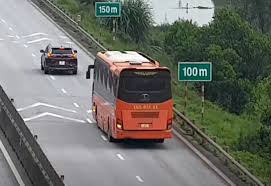
Starting August 27, Vietnam has intensified its campaign to enforce penalties for drivers who fail to maintain safe distances on highways. This initiative aims to enhance road safety, particularly on high-speed routes where the risk of accidents increases significantly without proper spacing between vehicles.
According to legal expert Dang Van Cuong, maintaining a safe distance is a legal requirement that has been in place prior to this campaign, not a new regulation. Highways allow vehicles to travel at high speeds, and the absence of adequate spacing can lead to serious traffic accidents. All countries with highways have regulations regarding safe distances, which are crucial for preventing accidents.
Under the current legal framework, drivers are required to keep a safe distance from the vehicle in front, as specified in Circular 38/2024/TT-BGTVT. The required distance varies depending on speed: 35 meters at 60 km/h, 55 meters at speeds between 60 to 80 km/h, 70 meters at speeds between 80 to 100 km/h, and 100 meters at speeds between 100 to 120 km/h. In adverse weather conditions, drivers must increase their following distance accordingly.
The penalties for failing to maintain a safe distance range from 4 to 6 million VND and a deduction of 2 points from the driver's license. If the violation results in an accident, the fine can increase to between 20 to 22 million VND, with a deduction of up to 10 points from the license.
Cuong emphasizes that simply having a camera record two vehicles close together does not automatically justify a penalty. Enforcement must be based on clear evidence of the violation, including accurate identification of the vehicles involved, their respective lanes, and the conditions at the time of the incident. This includes assessing whether the vehicles were in the same lane or if one merged unexpectedly, which could affect the perceived distance.
In cases where drivers face penalties due to sudden lane changes by other vehicles or traffic congestion, Cuong advises that they should request to see the evidence used for the penalty, such as images or video from surveillance equipment. Drivers should also check the details of the incident, including location, time, vehicle speed, and traffic conditions, and provide any evidence that counters the claim of a violation.
Cuong notes that the goal of these regulations is not merely to impose fines but to enhance driver awareness and safety on the roads. The presence of surveillance cameras is intended to change driver behavior, fostering a culture of compliance even in the absence of law enforcement officers. The ultimate aim is to ensure that drivers maintain safe distances to prevent accidents, improving overall road safety in Vietnam.