Trump Considers Toll Fees for Hormuz Strait
In a recent statement, U.S. President Donald Trump suggested the possibility of imposing toll fees for
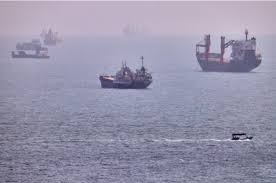
Iran has made a bold demand to the United States, urging President Donald Trump to acknowledge what it considers Washington's failures in the Middle East. The Iranian government has asserted that the strategic Strait of Hormuz will continue to be under its control, countering Trump's claims that the strait would soon be recognized as U.S. territory.
Kazem Gharibabadi, Iran's Deputy Foreign Minister, emphasized that the vital maritime route will be opened or closed only at Iran's command. He stated on social media, "As long as the U.S. does not accept the reality of its failure and relinquishes its illusions, Iran will continue to enforce the blockade." Gharibabadi urged the U.S. to face the facts, stating that Washington has suffered "heavy strategic defeats." He firmly declared that the Strait of Hormuz "belongs to Iran and will always belong to Iran."
Iranian state media also reported comments from Gholam-Hossein Mohseni-Eje’i, the head of Iran's judiciary, who described Trump as a complete failure in the harsh political and military arena. He reiterated that the Strait of Hormuz is "an inseparable part" of Iran. Mohseni-Eje’i remarked, "What billion-dollar aircraft carriers cannot achieve cannot be accomplished by a few lines on social media or a speech."
Meanwhile, during a political rally in New York on August 15, Trump claimed, "After we defeat Iran... I will soon declare the Strait of Hormuz as U.S. territory." He also suggested that Americans should be prepared for higher gas prices as the conflict with Iran continues, arguing that paying "a little more for gas" is necessary to prevent a "very evil nation" from acquiring nuclear weapons.
The exchange of statements illustrates the ongoing deadlock between the U.S. and Iran, as negotiations aimed at resolving the conflict and restoring maritime activity in the Strait of Hormuz have not made significant progress. At the same time, a ceasefire agreement in the Middle East between Israel and the Iran-backed Hezbollah is also at risk of collapse, following Israeli airstrikes that resulted in the deaths of 11 people, including three children. These strikes are considered the deadliest since a separate ceasefire was signed in June.
The stalemate persists as both the U.S. and Iran begin to feel the negative economic impacts, facing increasing pressure from domestic public opinion. In the U.S., the conflict has contributed to rising fuel prices. Conversely, in Iran, the blockade and disruptions to trade have led to increased inflation, making it more difficult for families to purchase essential items such as cooking oil and bread.
However, there are currently few signs that either side is willing to make concessions or resume negotiations soon. Iranian Foreign Minister Abbas Araghchi stated that Tehran will not return to the negotiating table with Washington until certain conditions are met. Iran is demanding compensation for damages caused by the U.S. as a prerequisite for ending the conflict and reopening the Strait of Hormuz. An Iranian government official estimated the total damages at around $270 billion. Other demands from Tehran include ending the U.S. naval blockade, lifting economic sanctions, withdrawing U.S. forces from the region, and releasing Iranian assets that are currently frozen.