Yemen Faces Escalating Conflict as Houthis and Government Trade Attacks
Yemen is on the brink of renewed full-scale war as government forces launch 81 attacks against Houthi
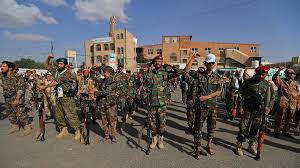
The Houthi movement, officially known as Ansar Allah, began as a revivalist Shiite group in northern Yemen in 1994. Initially opposing political and economic injustices under President Ali Abdullah Saleh, the group evolved into a significant opposition force. After the death of its leader, Hussein al-Houthi, in 2004, the movement intensified its rebellion against the Yemeni government, which ultimately led to the current conflict.
In 2011, amid the Arab Spring protests, the Houthis expanded their influence in northern Yemen, capitalizing on the weakened central government. By 2014, they seized control of the capital, Sanaa, overthrowing the internationally recognized government of President Abd-Rabbu Mansour Hadi. This action prompted a military intervention by a Saudi-led coalition in 2015, aiming to restore Hadi's government.
During their advance, the Houthis captured vast military stockpiles, including ballistic missiles and drones, which they now use against the Saudi coalition. Despite being outmatched in air power, the Houthis have managed to sustain their military capabilities through support from Iran and Hezbollah, receiving both training and weaponry.
The conflict has reached a stalemate, with a ceasefire agreement signed in 2022. However, tensions remain high, especially after recent Houthi missile attacks on Saudi Arabia, including a significant strike on King Khalid Airport that resulted in numerous casualties. The U.S. is now weighing its options for military involvement alongside Saudi Arabia in response to these provocations.
Experts suggest that the Houthis' resilience is partly due to their strategic use of terrain and their ability to adapt and innovate in military tactics. They have developed advanced weaponry, including drones capable of evading radar and long-range missiles, enhancing their threat to regional stability.
As the situation evolves, the dynamics between the Houthis, Saudi Arabia, and Iran continue to shape the geopolitical landscape of the Middle East. The Houthis' firm stance and refusal to negotiate pose significant challenges for any diplomatic resolutions, leaving the region on edge.