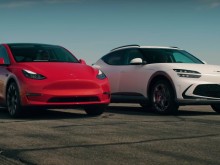
Hyundai Motor Appoints Former Tesla and NVIDIA Executives for Autonomous Driving
Hyundai Motor has appointed former executives from Tesla and NVIDIA to lead its autonomous driving division,
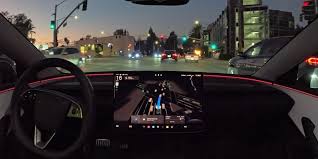
Tesla's ambitions to roll out its Full Self-Driving (FSD) technology across Europe have encountered serious challenges, as recent testing in Brussels highlighted significant performance issues. The reality of navigating Europe's narrow, pedestrian-heavy streets has proven to be a daunting task for Tesla's advanced software, raising questions about its readiness for public use.
An independent Belgian advocacy group, Johanna.be, conducted tests over three days in July, covering approximately 400 kilometers in a Tesla equipped with FSD. The results were concerning: the vehicle exceeded the legal speed limit in designated 30 km/h zones 55% of the time, averaging a speed of 44 km/h. In residential areas, where the speed limit is even lower at 20 km/h, the car violated the limit in 42% of trials. Testers noted that the vehicle often misinterpreted speed limits, displaying a 50 km/h limit on its dashboard while driving in a 30 km/h zone.
Moreover, the Tesla attempted to overtake cyclists on narrow streets where Belgian traffic laws explicitly prohibit such actions. This behavior raises serious safety concerns, as it places vulnerable road users at risk. The situation is exacerbated by Tesla's decision to remove the option for drivers to set a maximum speed limit, allowing the vehicle to determine its speed autonomously.
As Tesla prepares for a crucial vote by the European Union on October 6 regarding the approval of FSD, the draft agenda from the Technical Committee on Motor Vehicles indicates that no discussion will occur about Tesla’s technology, delaying any potential approval until at least December. This setback is significant, as Tesla needs a majority of at least 15 member states representing 65% of the EU population to secure a pan-European mandate.
Countries like France, Germany, Italy, and Spain have already expressed concerns over urban speeding and driver distraction, collectively representing about 58% of the EU population. Without their support, Tesla's hopes for a swift rollout of its FSD technology in Europe seem increasingly unlikely.
This situation reflects a broader identity crisis within Tesla, which has shifted its focus from manufacturing vehicles to pursuing an ambitious robotaxi vision. Unlike the more lenient regulatory environment in the United States, Europe demands a higher standard for road safety and compliance, making it clear that Tesla must adapt its technology to meet these stringent requirements.
As the deadline approaches, Tesla faces the challenge of overcoming bureaucratic hurdles and addressing the safety concerns raised by its technology. The company will need to demonstrate that its vehicles can reliably navigate the complexities of European roads while respecting local traffic laws and ensuring the safety of all road users.