Israel Responds to Turkey's Request for Arrest Warrant Against Netanyahu
Israel has reacted strongly to Turkey's request for Interpol to issue a red notice for Prime Minister
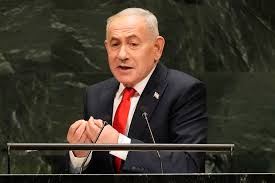
Israeli Prime Minister Benjamin Netanyahu took to the podium at the UN General Assembly on September 24, where world leaders present their foreign priorities and strategies. Known for his enthusiasm during such appearances, this year’s speech was even broadcast during prime time in Israel. Analysts noted that Netanyahu hoped this address would bolster his standing in pre-election polls scheduled for next month, portraying him as an indispensable leader capable of defending a nation under pressure.
However, the reality at the assembly was starkly different. As Netanyahu began his speech, many delegates stood up and exited the hall, leaving numerous empty seats behind. In response, Netanyahu called those departing “cowards” and proceeded to defend Israel’s military actions in various Middle Eastern regions over the past three years, dismissing accusations that Israel's military actions constituted “genocide” in Gaza.
With a largely empty auditorium, Netanyahu’s message seemed primarily aimed at Israeli voters, who will determine his re-election prospects next month. “To all of Israel's heroes, I promise: We will continue to defend our country. We will continue to win, because we have no other choice,” he stated.
The annual UN conference has also served as a platform for Netanyahu to warn about the dangers of a nuclear-armed Iran and to boast about his political influence in the U.S. However, this time, convincing public opinion proved challenging. Iran has remained resilient despite months of joint airstrikes by the U.S. and Israel, while Netanyahu's credibility has waned, even among his supporters in the U.S.
Political analysts suggest that this might be one of Netanyahu's most challenging moments, as he finds himself cornered. During this UN meeting, he expected support from U.S. President Donald Trump in the final stretch of the election campaign in Israel. However, he did not receive such backing, as Trump refrained from praising him as he had in the past, amid growing tensions related to the Iran conflict.
Trump aims to negotiate a diplomatic deal to reopen the Strait of Hormuz, manage Iran's enriched uranium stock, and end the conflict that has driven global energy prices up and divided his voter base. Meanwhile, Netanyahu faces domestic pressure to intensify military campaigns against Hezbollah, Iran's most significant proxy in the region, which the U.S. has designated as a terrorist organization. Iran views the cessation of Israeli attacks on Hezbollah as a prerequisite for any ceasefire.
Disagreements have also arisen over Israeli airstrikes in Lebanon and the U.S.-backed peace plan for Gaza. Last month, Netanyahu rejected Trump’s phased disarmament plan for Hamas and resumed airstrikes against the group after a brief pause. Nevertheless, in his UN speech, Netanyahu praised Trump, asserting that Israel “has no greater partner.” He welcomed the U.S. airstrikes on Iranian nuclear facilities in 2025 and the joint military operations against Tehran earlier this year, stating, “Israel and the U.S. have acted together, not only to protect ourselves but also to save human civilization.”
Meanwhile, Arab nations have utilized the UN forum to criticize Israel. Jordan's King Abdullah II, speaking on September 22, condemned Israel's military actions, stating, “It is frightening that this government believes it can act without consequences.” Palestinian Authority leader Mahmoud Abbas accused Israel's policies of undermining the two-state solution and threatening Palestinian existence. “Israel today is isolated on the international stage perhaps more than ever since its establishment in 1948,” acknowledged Yaakov Katz, a senior researcher at the Jewish Policy Institute in Jerusalem.