Traffic Jam on Vinh Tuy Bridge Due to Heavy Rain
A significant traffic jam occurred on Vinh Tuy Bridge in Hanoi on July 31, affecting thousands of vehicles.
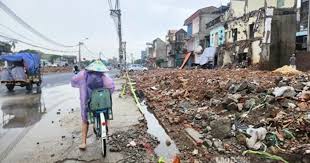
Construction sites in Hanoi are currently under scrutiny for their lack of adequate safety barriers and warning signs, which pose significant risks to both pedestrians and vehicles. Reports indicate that many sites are poorly marked, creating hazardous conditions for those passing through.
On September 17, a social media post highlighted an incident where a car fell into an excavation site in Phuc Duc village, Quốc Oai district, due to heavy rain obscuring the area. Local resident Nguyen Cong Viet noted that the inadequate barrier system failed to alert the driver to the danger. This incident has sparked discussions about the potential safety hazards at construction sites where traffic management and warning systems are insufficient.
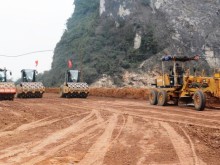
At the ongoing expansion of National Route 6, vehicles are still required to navigate through construction zones. This area, known for its narrow roads and heavy traffic, often experiences congestion during peak hours. Unfortunately, the barriers and warning signs in place do not effectively separate the construction area from the roadway, leading to further safety concerns.
Nguyen Minh Long, a resident of Chương Mỹ district, expressed the need for urgent project completion while emphasizing that proper barriers and clear warning signs are essential for public safety. Similar issues have been observed along the La Khe canal road, where some sections show signs of erosion and lack adequate safety measures, complicating travel and increasing the risk of accidents.
The Hanoi Technical Infrastructure Management Center has stated that all construction projects must adhere to safety regulations, including proper traffic management and warning signage. The prevalence of inadequate barriers is often linked to smaller contractors or subcontractors who may not follow these guidelines.
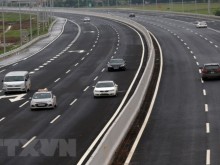
Concerns are not limited to urban areas; similar issues have been reported on highways. Observations from various construction sites reveal that while some barriers and warning signs are present, they do not effectively serve their purpose in directing traffic or ensuring safety.
In response to recent traffic accidents related to construction site safety, the Vietnam Road Administration has instructed contractors to strictly follow safety protocols and improve the visibility of warning signs and barriers. They have also called for regular inspections at construction sites to enforce compliance and take action against those failing to meet safety standards.
According to lawyer Diep Nang Binh, determining liability in the event of an accident at a construction site requires assessing violations, the degree of fault, and the causal relationship between the violation and the outcome. The Road Law of 2024 stipulates that ensuring traffic safety during construction is the responsibility of the contractor. If barriers are poorly installed or damaged and not promptly repaired, the contractor may be held accountable.
While adverse weather conditions cannot absolve responsibility, contractors are expected to implement necessary preventive measures. Depending on the nature and consequences of the violation, penalties can range from administrative fines to criminal liability.
Drivers are also responsible for observing their surroundings and adjusting their speed or stopping when encountering obstacles or limited visibility. Liability in accidents is determined by various factors, including site conditions, barrier status, warning signs, construction plans, weather conditions, vehicle speed, and objective data such as dashcam footage.
Although these construction projects aim to upgrade and repair infrastructure, ensuring safety for all road users must be prioritized from the planning stages of construction.