Chinese Robot Maker Unitree Valued at Over $7.4 Billion After IPO
Chinese robotics company Unitree has been projected to be valued at over 7.4 billion yuan following its
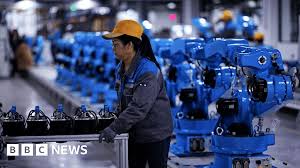
China is undergoing a remarkable transformation in automation, with over two million robots currently employed in its factories, more than any other country in the world. This shift is part of a larger initiative led by Xi Jinping, who has allocated $20 billion to position China at the forefront of technological innovation and competition, particularly against the United States.
At the Hangzhou Technician Institute, students are being trained in robotics and artificial intelligence, preparing them for a future where they will work alongside advanced machines. Chen Tianyu, a teacher at the institute, emphasizes the importance of adapting to the rapidly evolving landscape of AI and robotics, stating, "If you are not needed by the world of AI and robotics, then you'll definitely be among those eliminated." This sentiment reflects the urgency of preparing the next generation for a workforce increasingly dominated by automation.
In factories across China, industrial robots are not just performing repetitive tasks but are also being developed to build more robots. For instance, CRP Technology has been creating robotic arms tailored to various industrial needs for nearly a decade. These arms can execute over 90% of repetitive tasks, highlighting the potential for robots to replace human labor in the near future.
However, the rapid pace of automation raises concerns about the impact on China's human workforce. With predictions that over a third of the population will be over 60 by 2035 and a shrinking workforce, there is a pressing need for automation to fill the gaps left by an aging population. Yet, the transition must be handled carefully to avoid significant job losses that could devastate millions who rely on factory wages.
As China continues to invest in automation, the balance between technological advancement and workforce stability remains a critical challenge. Companies like Leapmotor are already achieving near-total automation in their production processes, but the question remains: will there come a day when human workers are no longer needed?
Despite the challenges, the Chinese government is committed to fostering a new generation of tech-savvy engineers. Vocational schools are expanding to accommodate the increasing demand for skilled workers in the robotics field, with students often pre-booked by companies before they even graduate. This proactive approach aims to mitigate the high youth unemployment rate in China, which currently stands at one in five.
While the future of work in China is uncertain, the ongoing revolution in automation is reshaping the landscape of the economy. As technology continues to evolve at a rapid pace, educators and students alike are urged to embrace change and prepare for the opportunities that lie ahead. The question remains whether this wave of innovation will lead to prosperity or simply result in job displacement for many.