Groundbreaking Ceremony for An Khanh Thermal Power Plant in Bac Giang
The An Khanh Thermal Power Plant in Bac Giang has officially begun construction, with an investment of
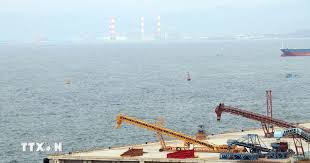
Khanh Hoa province has officially called for investment in the development of the Ca Na LNG power plant, as outlined in Decision 70-NQ/TW. This initiative is part of a broader strategy to enhance national energy security and promote sustainable economic growth in Vietnam.
The Ca Na LNG power plant is anticipated to play a pivotal role in establishing an industrial center and creating a comprehensive energy value chain. According to local officials, the project is expected to generate approximately 9 billion kWh of energy annually for the national grid, significantly contributing to the region's energy needs.
As part of the National Energy Development Plan (Revised Energy Plan VIII), the Vietnamese government aims to meet the growing electricity demand, projected to reach between 1,237.7 and 1,375.1 billion kWh by 2050. This demand is expected to be primarily driven by the industrial and construction sectors, which will account for around 50-60% of total consumption.
The LNG power plant is seen as a "bridge fuel" that will stabilize energy supply, particularly as the country transitions to renewable energy sources. It is designed to reduce CO2 emissions compared to coal-fired power plants, thereby supporting Vietnam's commitment to green energy.
In addition to the LNG facility, Khanh Hoa is also advancing its renewable energy initiatives, including solar and wind projects. The local government has emphasized the importance of developing infrastructure to support LNG importation, storage, and consumption, which is crucial for the growth of the gas industry.
Trinh Minh Hoang, Vice Chairman of the Khanh Hoa People's Committee, confirmed that the Trung Nam - Sideros River Joint Venture has been officially approved as the investor for the Ca Na LNG power plant. This major investment project, valued at over 57.384 trillion VND, includes a thermal power plant, an LNG terminal with a capacity of 1-1.2 million tons per year, and other supporting facilities.
The construction is set to begin by the end of 2026, with the aim of commencing operations by December 2030. This project not only represents a significant step in energy production but also lays the groundwork for the development of related industries, services, and infrastructure in the region.
Once operational, the Ca Na LNG power plant is expected to create thousands of jobs and contribute significantly to the local budget, fostering a shift towards a modern, green, and sustainable economic structure. The Khanh Hoa People's Committee is committed to addressing regulatory barriers and ensuring that the project adheres to safety and environmental standards.
Nguyen Tam Tien, General Director of Trungnam Group, highlighted that the Ca Na LNG power plant marks a significant milestone for Vietnam's energy sector, being the first project awarded through international bidding under the Eighth Energy Development Plan. This initiative will not only enhance national energy security but also support the goals outlined in Decision 70-NQ/TW.
As Vietnam prepares for a surge in electricity demand in the coming years, the development of LNG thermal power plants is identified as a critical solution for ensuring energy security and facilitating the country's green transition.