Will the Boeing 777X Face Airport Bans Like the Airbus A380?
As Boeing prepares to launch the 777X, questions arise about its potential airport bans, similar to the
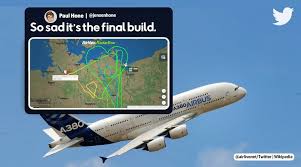
The Airbus A380, with a wingspan of nearly 80 meters and a maximum takeoff weight of around 575 tons, is not only a marvel of engineering but also a significant challenge for airports worldwide. While it can carry over 800 passengers in a single flight, its size requires special considerations regarding runway length, taxiways, and overall airport infrastructure.
The A380 is the first full-length double-deck passenger aircraft and the largest passenger plane ever built. Its development began in the early 1990s, with the first test flight taking place in 2005. It officially entered commercial service with Singapore Airlines in October 2007. The aircraft measures approximately 73 meters in length and stands 24.1 meters tall, with a passenger area equivalent to about three tennis courts.
Airports must meet several stringent requirements to accommodate the A380. While it is designed to operate on existing airport infrastructure, it requires wider taxiways and greater distances between aircraft and obstacles due to its size. Notably, the A380 is classified as a Code F aircraft, which means airports must ensure that their runways and taxiways can safely handle its operational needs.
Airports face significant operational challenges when accommodating the A380. For instance, the aircraft's wake turbulence is classified as SUPER, meaning that other aircraft must maintain a greater distance when flying behind it. This requirement can reduce runway capacity and complicate scheduling at busy airports.
Additionally, the A380's four powerful engines generate significant thrust, which can affect nearby vehicles and equipment during takeoff and landing. Airports must account for this when designing their layouts and operational procedures.
While the Airbus A380 offers airlines the ability to transport large numbers of passengers efficiently, its operational requirements pose challenges for many airports. As the aviation industry continues to evolve, airports must adapt their infrastructures and procedures to accommodate this iconic aircraft effectively.