Amending, supplementing the Law on Land to overcome limitations
(VAN) General Secretary Nguyen Phu Trong raised the issue of land management and use at the closing session
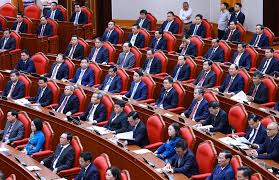
The Central Government of Vietnam has laid out a comprehensive plan to revise the Land Law, focusing on state regulation and control over land pricing. A key shift in perspective is moving from merely compensating for land acquisition to actively reconstructing the lives of citizens affected by such changes. This approach is part of the broader Resolution No. 21 from the Third Central Conference, which outlines the direction for amending the Land Law and related legislation.
According to the Central Government, land is a unique national resource and a vital component of territorial sovereignty, economic security, and national defense. It is considered a special production material and an essential resource for the country’s development. The government has firmly stated that land ownership belongs to the entire populace, with the state acting as the representative owner and manager. Privatization of land is strictly prohibited, and foreign entities are not allowed to transfer or acquire land use rights, except for overseas Vietnamese.
The state will exercise its rights as the representative owner by making decisions regarding land planning, usage, recovery, allocation, leasing, and recognizing land use rights. It will also set land prices and policies to manage the increased value of land that is not created by the land users themselves. Land recovery will be conducted for national defense, socio-economic development, and public benefit, ensuring fairness, transparency, and accountability.
Another significant point highlighted by the Central Government is that land use rights are a special type of asset but do not equate to ownership. The government will not reconsider legal land use rights established under past policies and will not acknowledge claims for land that has been allocated to others during the implementation of land policies.
The resolution emphasizes that the state will control and decide land prices, transitioning from a mindset of compensating for acquired property to one that focuses on rebuilding the lives of those whose land is taken. The government aims to improve living conditions and livelihoods for affected citizens by facilitating housing development and providing land for affordable rental housing.
Furthermore, the Central Government stresses the need for comprehensive and synchronized policies regarding land management, ensuring they align with the socialist-oriented market economy. It calls for targeted policies for different land use types to maximize the potential and value of land resources while combating corruption, waste, and misuse of land.
To achieve these objectives, the government plans to transition from administrative management to modern governance of land, ensuring unified, transparent, and efficient management based on digital platforms and technology. The goal is to have a thorough investigation, evaluation, and accounting of land resources within the economy.
By the end of 2026, the Central Government aims to complete a digital database covering all land parcels with collected information. By 2027, it plans to finish mapping and establishing land records for areas not yet included in the database. By 2030, the legal framework governing land will be fully aligned and suitable for the socialist-oriented market economy, addressing issues of land waste, pollution, and historical management challenges.