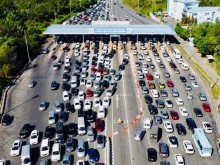
The gateway to Hanoi and Ho Chi Minh City is congested on the last day of the holiday
Ring 3, Phap Van Expressway, National Highway 13, Trung Luong Expressway… into the two cities with traffic
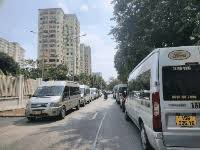
Residents of the Nam Trung Yen urban area in Hanoi have raised concerns about the ongoing issue of vehicles occupying internal roads, which has led to severe traffic congestion. For several months, a variety of vehicles, including 5 to 24-seat contract cars, limousines, and shuttle buses, have been regularly stopping and waiting for passengers along the narrow streets.
This situation has made many already cramped roads even more congested, forcing vehicles to travel in only one direction. The presence of vehicles traveling against traffic increases the risk of potential accidents.
According to Nguyen Duc Hung, a resident of Block B3, the rampant parking on the streets and sidewalks of areas like Dinh Nup and Tu Mo is obstructing traffic, particularly affecting the elderly and children. "The constant parking of cars on the roads makes it very difficult for residents to move around," he said.
Another resident, Nguyen Xuan Toan, noted that the area has long been a hub for contract cars and buses, which occupy pathways, especially in the evening, disrupting daily activities. "When authorities enforce urban order on major streets, these vehicles simply move into the urban area, making it very hard for residents to get around," Toan added.
Not only is the Nam Trung Yen urban area affected, but Lê Xuân Tú, a resident of Song Da urban area, also reported similar issues. He mentioned that in addition to the rampant parking on the roads, a licensed parking service is causing regular congestion, particularly during peak hours in the evening when traffic volume increases.
Reports from Lao Dong newspaper indicate that many internal roads with narrow widths still have designated parking spots, complicating residents' movements. Furthermore, existing parking lots in the area are overwhelmed due to the increasing number of vehicles owned by residents. Many service vehicle owners, looking to save costs, have opted to park on the roads instead of using parking lots, even occupying sidewalks.
According to the regulations set forth in Decree No. 168/2024/NĐ-CP, stopping and parking near intersections or areas with high vehicle density is prohibited. However, many drivers continue to ignore these rules, leading to traffic disorder and public frustration.
In response to the issue of parking and the organization of vehicle storage on public roads, a representative from the Hanoi Department of Construction stated that managing roadways and sidewalks in urban areas falls under local government jurisdiction. They emphasized that temporary parking permits are issued to meet immediate public needs. In the long term, Hanoi is implementing a three-tier parking system, including elevated, ground, and underground options, to gradually address the parking shortage.
The ongoing occupation of roads and sidewalks not only obstructs traffic but also distorts the living environment in planned urban areas. As internal roads become makeshift parking lots, communal living spaces are shrinking, and the urban landscape is failing to meet initial expectations.