Ho Chi Minh City Launches 11 Major Projects Worth Over $7.5 Billion
Ho Chi Minh City has officially commenced and inaugurated 11 significant projects with a total investment
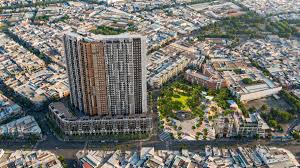
Two long-standing residential areas in Ho Chi Minh City are undergoing substantial redevelopment, marking a significant transformation for the neighborhoods of Ma Lang and Ga-Gao market. The urban renewal projects were officially launched on August 29, after nearly three decades of stagnation. With a total investment of about 15.67 trillion VND, these projects are being executed under a Public-Private Partnership (PPP) model, with Khang Dien Investment and Housing Business Joint Stock Company as the main investor.
Ma Lang, also known as the Nguyen Cu Trinh quadrangle, is located less than a kilometer from Ben Thanh Market and is bordered by Nguyen Trai, Cong Quynh, Tran Dinh Xu, and Nguyen Cu Trinh streets. Historically, this area was primarily a cemetery before 1975. Following the relocation of graves, it developed into a densely populated residential zone. Currently, the project area encompasses approximately 1,030 houses inhabited by around 4,700 residents, with many homes measuring less than 20 square meters.
The new urban plan for Ma Lang spans nearly 3.8 hectares and includes the construction of a 38-story apartment building with around 1,400 units, alongside low-rise housing and various community amenities such as parks and schools. The project aims to replace the cramped, dilapidated houses with modern living spaces, thereby enhancing the quality of life for residents.
In addition to Ma Lang, the Ga-Gao market area, situated about one kilometer away, is also set for redevelopment. This market, which originally served as a trading hub for chicken and rice, has seen many households establish small living and business spaces over the years. The new plan involves investing in infrastructure and constructing a 35-story residential building with approximately 760 apartments. Unlike previous proposals, this project focuses on providing on-site resettlement apartments for affected residents, allowing them to remain within their familiar community.
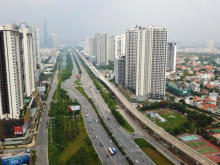
The redevelopment of both areas is not only aimed at improving living conditions but also at creating green spaces and community facilities, fostering a better environment for the residents. With the city’s commitment to urban renewal, these projects are expected to significantly enhance the urban landscape of Ho Chi Minh City.