Perseid Meteor Shower: A Celestial Spectacle This August
The Perseid meteor shower is set to dazzle skywatchers this August, peaking on the night of August 12-13.
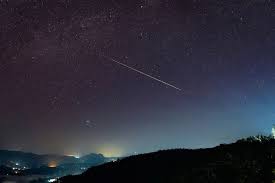
The Perseid meteor shower, known for its stunning displays, will reach its peak tonight, providing an excellent opportunity for residents of Hanoi to enjoy this celestial phenomenon. The best viewing times are expected after midnight on August 12, particularly between 1 AM and dawn on August 13. The meteor shower will be visible across various locations in the sky, primarily in the northeastern direction.
According to Nguyen Hai Trieu, an expert in astronomy education, the ideal spots for observing the Perseids are in the outskirts and rural areas where light pollution is minimal. Recommended locations include Ba Vi, Chuong My, My Duc, and Soc Son within Hanoi. For those willing to travel further, scenic spots like Tam Dao, Long Coc (Phu Tho), Mai Chau, Moc Chau (Son La), and Dong Cao (Bac Giang) are also excellent choices.
This year’s meteor shower viewing conditions are favorable due to a lack of interference from bright moonlight and generally clear skies. The Perseid meteor shower occurs annually from July 17 to August 24, peaking around August 9 to 13. Therefore, observers have the opportunity to catch glimpses of the meteors throughout the week, not just tonight.
To enhance the chances of spotting meteors, it is advisable to choose a location with an unobstructed view of the sky, away from bright streetlights and densely populated areas. Once in a dark area, it typically takes the eyes about 2-3 minutes to adjust to the darkness. Observers should also minimize looking at screens, as the light can hinder their ability to see faint meteors.
The Perseid meteor shower occurs when Earth passes through debris left by comet 109P/Swift-Tuttle. The name 'Perseids' comes from the fact that the meteors seem to radiate from the constellation Perseus when viewed from Earth. This year, the peak of the meteor shower coincides with a total solar eclipse on August 12, making it a unique astronomical event. Unlike the eclipse, which can only be seen from specific geographic areas, the Perseid meteor shower can be enjoyed by most of the Northern Hemisphere.
Looking ahead, the next significant meteor shower will be the Orionids, which will be active from October 2 to November 12, peaking on October 23.