Lyrid meteor shower returns to UK skies with peak expected on 22 April
Skywatchers in the UK have a fresh reason to look up this week, as the annual Lyrid meteor shower becomes
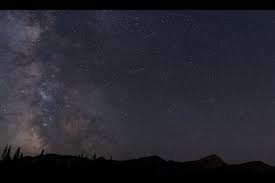
Skywatchers are being encouraged to mark their calendars for August 12-13, as one of the most spectacular meteor showers of the year is expected to reach peak intensity under nearly perfect viewing conditions. The Perseid meteor shower has already begun its annual journey across the night sky, but the real show is still ahead. In just a few weeks, Earth will move through the richest part of the debris trail left behind by a giant comet, creating the possibility of a dazzling display of shooting stars, brilliant fireballs, and countless streaks of light flashing overhead.
For stargazers, 2026 could be a particularly memorable year. The Perseids will reach their peak on the night of August 12 into the early morning hours of August 13, and for the first time in nearly two decades, the timing lines up with an almost perfect natural backdrop: a New Moon. With little to no moonlight interfering, the sky will be darker, allowing observers to see far more meteors than they would during a brighter lunar phase.
"When the moon is in the new phase, you can't actually see it. There's no light pollution coming from the moon," said University of Alberta physics professor Sharon Morsink.
The Perseids are one of the most famous meteor showers in the world, visible each summer as Earth passes through a stream of dust and rocky particles left behind by a comet. As the comet travels around the Sun, heat causes ice on its surface to turn into gas, releasing pieces of debris that spread along its orbital path.
Every year, from roughly July 17 to August 24, Earth crosses this ancient trail. When tiny fragments of comet material collide with our atmosphere at speeds approaching 60 kilometers per second, friction and pressure heat the surrounding air, creating the glowing streaks we know as meteors.
"What we see is just a little bit of light coming from the fact that the little dust particles got heated up in the atmosphere," Morsink explained. "They're so tiny that nothing actually gets to the Earth."
Although these flashes appear to come from the constellation Perseus, giving the shower its name, observers do not need to stare directly at that constellation. Meteors can travel across large portions of the sky, so the best way to watch is to find a dark, open area, lie back, and take in as much of the sky as possible.
"The peak of the Perseid meteor shower usually sees 50 to 100 meteors per hour raining down on Earth," said St. Albert astronomer Murray Paulson. "They appear to issue forth from a point in space called a radiant. The Perseids are called that because they appear to be coming from a point in the constellation of Perseus."
The best viewing window will come after midnight and before dawn, when Perseus is higher in the sky and more meteors are likely to be visible. Under ideal dark-sky conditions, the Perseids can produce dozens of meteors per hour, with peak rates often reaching around 75 to 100 meteors per hour under perfect circumstances.
Among the most breathtaking sights will be the shower’s famous fireballs, exceptionally bright meteors that can be seen from great distances. This year's Perseid meteor shower promises to be a remarkable event for both seasoned astronomers and casual skywatchers alike.