2020 was Europe's hottest year on record - EU scientists
Europe experienced its hottest year on record last year, while the Arctic suffered a summer of extreme
Global ocean temperatures reached a record high in July, coinciding with intense heat and severe drought affecting Western Europe. The Copernicus Climate Change Service reported that the average sea surface temperature in non-polar regions surpassed previous records, marking July as the hottest month ever recorded.
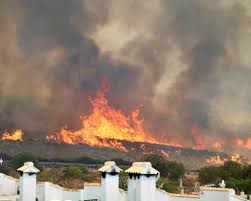
Regions along the Atlantic coast and the western Mediterranean experienced unprecedented sea surface temperatures. Western Europe faced the hottest June and July in history, with temperatures exceeding normal levels by 2.79 degrees Celsius, surpassing a record set four years ago. This extreme heat has led to widespread wildfires devastating large areas in the Mediterranean.
Central Europe is also reeling from a heatwave, with countries like Austria and Slovakia breaking national temperature records. Samantha Burgess, a climate scientist at the European Centre for Medium-Range Weather Forecasts, described this summer as a prime example of how climate change is exacerbating extreme weather events. She explained that stable high-pressure systems trapping heat over Western Europe intensify the already severe drought conditions. As the land dries out, its natural cooling ability diminishes, allowing temperatures to rise more rapidly.
Since late spring, Europe has faced multiple heatwaves, with a particularly severe one in late June reportedly causing over 10,000 deaths. The widespread drought that began in May and June worsened last month, with unusually low rainfall and soil moisture across much of Western Europe. In drought-stricken areas, including France, Spain, and parts of Germany and the UK, low river levels have impacted water supply, irrigation, and power plants.
Due to a lack of cooling water, two coal-fired power plants in Poland were forced to shut down last week, and Hungary's only nuclear power plant also closed for the first time in 44 years. Firefighters are struggling to extinguish wildfires in central Spain, exacerbated by hot, dry conditions and strong winds.
The economic damage from heat and drought poses significant environmental threats to the European economy. Early estimates suggest that the June heatwave caused €2 billion (approximately $2.3 billion) in losses for grain farmers due to crop failures. Economists warn that long-term damages could far exceed short-term losses, especially if drought conditions persist for years.
A recent study by the European Institute of Economics (CMCC) highlighted that the severe drought from 2015 to 2018 cost Europe €439 billion (about $507 billion). While agriculture was heavily impacted in the short term, manufacturing and construction faced lighter but prolonged effects. Marta Mastropietro, a researcher at CMCC and the Polytechnic University of Milan, stated that even a single year of drought can cause significant economic damage, but prolonged droughts create compounded issues across sectors, accumulating over years.
Data from the European Forest Fire Information System indicates that nearly half a million hectares of land have been burned across the EU this year, accompanied by above-average pollution levels due to thick smoke from burning vegetation. Hot, dry, and windy weather conditions have set new records for severity at this time of year. According to Víctor Resco de Dios, a forestry engineering professor at the University of Lleida, climate change is creating increasingly favorable conditions for large-scale wildfires.