Thanh Hoa Activates Growth Plan for the Last Six Months of 2026
Thanh Hoa province has announced a comprehensive growth plan aimed at achieving its economic and social
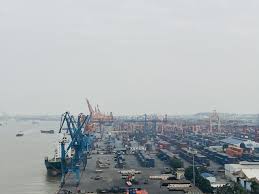
Hai Phong has recently announced an adjustment to its economic growth scenario, setting a target for a 13% increase in Gross Regional Domestic Product (GRDP) for the year 2026. This target is not merely a numerical goal but also serves as a test of the city's administrative capabilities and its ability to mobilize resources and stimulate new economic drivers.
According to the Hai Phong People's Committee, the city's GRDP rose by 11.33% in the first half of 2026, marking the highest growth rate in five years and placing it third nationwide among centrally governed cities. However, this growth rate fell short of the set targets, leading to significant pressure on the city to achieve its goals in the latter half of the year.
The revised growth scenario focuses on resource allocation, clearly identifying growth drivers, and assigning responsibilities to various agencies. Hai Phong aims for a GRDP of 731.651 trillion VND (approximately 31 billion USD) in 2026, representing a 13% increase from 2025. Key sectors contributing to this growth include agriculture, forestry, and fisheries, projected to grow by 2.35%; industry and construction by 15.40%; and services by 11.21%.
In addition to the GRDP growth target, the city aims to achieve total state budget revenue of over 194.935 trillion VND, with total investment reaching 363 trillion VND. Hai Phong also plans to complete 7,135 social housing units and establish 7,500 new businesses within the year.
To meet these ambitious targets, the Hai Phong People's Committee has called on all departments and localities to closely follow the directives of the National Assembly, the Government, and the city authorities. They are tasked with developing specific, breakthrough solutions that align with practical conditions. The city is under pressure to maximize achievements while swiftly addressing any weaknesses and effectively leveraging the potential of each sector.
In the industrial, trade, and service sectors, the Department of Industry and Trade is responsible for ensuring electricity supply for production, assisting businesses, promoting trade, boosting consumption, and enhancing e-commerce and logistics infrastructure. The Management Board of the Economic Zone is tasked with accelerating land clearance and infrastructure investment in industrial zones and ports, while also attracting investments into economic zones and free trade zones.
Furthermore, the Department of Construction is focusing on developing social housing, expediting planning processes, and managing construction material prices. The Department of Agriculture and Environment is responsible for ensuring agricultural production and disaster prevention while facilitating land auctions and mineral exploitation for key projects.
With a clear focus on achieving its revised growth scenario, Hai Phong is determined to meet the challenges of the next six months. The target of a 13% increase in GRDP is seen not only as a numerical goal but also as a critical test of the city’s governance and its ability to unlock new economic potentials.