Vietnam's Defense Ministry Clarifies Tattoo and Vision Standards for Military Draft
The Ministry of Defense in Vietnam has clarified regulations regarding tattoos and refractive errors for
The Ministry of Defense of Vietnam has proposed the implementation of a standardized uniform system for military education courses, which will impact more than one million students each year. This initiative is part of a draft circular aimed at regulating the management, use, and return of uniforms and common materials used in military education and security training at various educational centers.
The draft circular seeks to establish a legal framework that standardizes the production, procurement, distribution, management, usage, return, and liquidation of uniforms and shared materials. Currently, these processes are primarily guided by decisions from the Ministry of Defense, but the existing models, colors, and technical specifications lack uniformity.
Under the proposed regulations, students will be allowed to use 15 types of uniforms and materials, including badges, helmets, caps, long-sleeve shirts, warm jackets, belts, low-top shoes, plastic sandals, socks, blankets, pillows, mosquito nets, backpacks, and rain ponchos. The standardized designs will include specific styles, colors, and technical specifications.
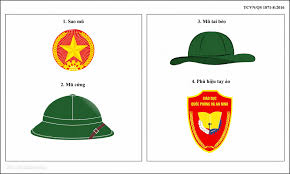
The badges will be made of flexible aluminum with a red background, featuring a five-pointed yellow star, rice ears on either side, and the inscription "Military Education and Security". The helmets will be covered with green gabardine fabric, while the caps will have a wide brim and adjustable straps. The shoulder patches will be uniquely designed for the course, depicting a shield shape with a red background, an open book, a rifle with a bayonet, a wheel of history, rice ears, and the phrase "Military Education and Security".
Both male and female uniforms will feature green colors but will differ in tailoring styles. The warm jackets will also be specially designed for each gender, maintaining uniform colors and materials. Other items such as belts, low-top shoes, plastic sandals, mosquito nets, backpacks, and rain ponchos will also be standardized.
The draft specifies the standards for shared materials, detailing the specifications for belts, shoes, sandals, socks, blankets, pillows, mosquito nets, backpacks, and rain ponchos. Each student will be allowed to borrow specific items for their course, including one cap, one helmet, two sets of clothing, one pair of shoes, one pair of sandals, one pair of socks, one set of blankets, one mosquito net, one backpack, and one rain poncho. In colder regions, students will also be provided with warm jackets and comforters.
The draft also outlines the lifespan of each type of uniform and material. For instance, socks are to be used for three courses, while clothing, shoes, sandals, and helmets will last for ten courses. The other items, including blankets, mosquito nets, pillows, backpacks, caps, badges, and warm jackets, will be usable for thirty courses.
At the end of their courses, students are required to wash, dry, and return all borrowed uniforms and materials. If items are lost or damaged due to the student’s fault, they will be required to compensate according to regulations. Educational centers and training institutions will be responsible for managing these uniforms and materials based on quantity, type, quality, lifespan, and asset value, as well as updating data, conducting periodic inventories, and reporting to the relevant authorities.
The Ministry of Defense has emphasized that this draft does not alter the existing policies regarding uniform provision for students but primarily seeks to standardize current regulations and enhance management and usage practices nationwide.