Russia Tests Over 1,000 Weapons on the Battlefield in Past Year
Russian President Vladimir Putin announced that the country has tested more than 1,000 new weapons in combat
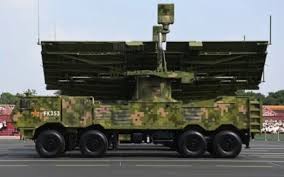
China has recently disclosed the capabilities of its high-power microwave (HPM) weapons, which can achieve outputs of up to 100 gigawatts. This technological advancement is seen as a potential game-changer in the realm of modern warfare, particularly concerning satellite systems like Elon Musk's Starlink.
The information was published in a paper this month in the journal High Power Laser and Particle Beams, authored by researchers from the National University of Defense Technology (NUDT). This marks a rare occasion where the Chinese military has publicly shared details about its high-power microwave weaponry. The research team, led by Zhang Jun from the Advanced Interdisciplinary Research Department at NUDT, highlighted the rapid advancements in China's pulse power technology, driven by strong national strategic demands.
According to the researchers, the pulse power systems designed for HPM weapons have progressed from laboratory prototypes to practical applications, evolving from basic functionality to high performance and durability. This paper could serve as a reference for countries assessing the vulnerability of large satellite constellations.
If deployed as anti-satellite weapons, these super-power microwave systems could threaten low Earth orbit satellite networks, such as Starlink, especially when these satellites are involved in military operations. Experts believe that a microwave pulse power level of 1 gigawatt is sufficient to severely disrupt or even damage the hardware of low Earth orbit satellites.
The paper indicates that various Chinese research institutes are developing weapons that achieve gigawatt power levels, with some already delivered to operational units. Notably, a device capable of reaching 100 gigawatts is composed of multiple high-power pulse generators. This system combines several pulses to produce unprecedented power levels, with further scalability potential.
“Achieving HPM power levels in the tens of gigawatts under strict space and weight constraints will be a crucial direction for the future development of HPM technology,” the research team stated. Due to limitations such as insulation capacity, a single pulse power source cannot generate enough energy to meet growing demands. “Synchronizing multiple compact pulse power modules allows each module to operate at optimal efficiency while maximizing the power-to-weight ratio,” they added.
The paper also discusses other devices, including pulse power systems entirely using semiconductor components, employing various methods to adapt to different environments and combat requirements. It emphasizes the systematic innovations behind this breakthrough, including a new lithium-ion capacitor hybrid system capable of instant activation at temperatures as low as -40 degrees Celsius, while maintaining a strong continuous power supply.
This technology could significantly enhance the responsiveness of China's electronic warfare units in winter or polar conditions. The achievements indicate China's growing confidence in its leading position in this field. Countries seeking to keep pace with China's advancements will face challenges such as declining industrial capabilities, reduced investment in research and development, and restrictions on access to strategic materials like rare earth elements.
Looking ahead, the research team prioritizes improving the accuracy of energy beam control while minimizing the size and cost of the systems. Meanwhile, the United States has criticized China for not adhering to international standards regarding missile testing, expressing concerns over Beijing's notification of ballistic missile launches from submarines in the Pacific.