Ministry of Public Security Launches DNA Collection for Fallen Soldiers
The Ministry of Public Security in Vietnam has initiated a nationwide DNA collection campaign to help
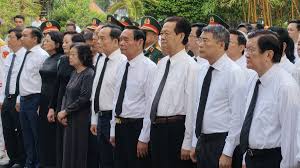
On July 6, Prime Minister Le Minh Hung attended a ceremony at Le Thi Rieng Park in Ho Chi Minh City, where he paid tribute to former General Secretary Tran Phu and honored the heroes and martyrs commemorated within the park. The ceremony marked the beginning of a search for the remains of fallen soldiers, believed to be buried in the area, which was once the Chi Hoa - Cho Quan cemetery.
During the ceremony, the Prime Minister emphasized that the search for and repatriation of soldiers' remains is a vital political task, reflecting the nation's gratitude towards those who sacrificed their lives for the country's independence and freedom. He acknowledged that the pain of war continues for many families until they receive information about their lost loved ones.
Prime Minister Le Minh Hung called for a systematic, scientific, and safe approach to the search, urging the involved forces to carefully examine every trace to aid in identifying the remains. He also requested that Ho Chi Minh City collaborate with the Ministry of National Defense and the Ministry of Public Security to mobilize resources and apply modern technology, particularly DNA testing, to expedite the process.
The search operation, initiated by the Ho Chi Minh City Command, began in late May after architect Nguyen Xuan Thang's research group provided information about potential mass grave sites. Authorities have since gathered witness accounts, held workshops to compare documents, and employed ground-penetrating radar for investigation. By the end of June, part of the park was cordoned off for exploratory digging in designated areas.
The search is part of a larger campaign called the 500 Days and Nights Operation, running from March 15, 2026, to July 27, 2027, with the goal of repatriating approximately 7,000 soldiers' remains. The campaign aims to collect samples from 230,000 unidentified graves and conduct DNA testing on about 18,000 samples.