Thailand faces tougher durian export war in China’s market from Vietnam and the Philippines
Thailand can face tougher competition in exporting durians to China’s market over the next five years as
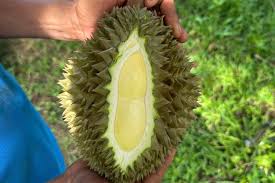
As the main harvesting season for durians begins, farmers in Dong Nai, Vietnam, are facing a troubling situation as prices for this popular fruit have plummeted. Currently, the price of Thai Monthong durian has dropped to approximately 60,000 VND per kilogram, a significant decrease that threatens the livelihoods of many farmers.
Le Thuy, a farmer who invested in a Thai Monthong durian orchard in what is now Dong Nai, expressed her concern over the falling prices. She noted that while traders are still purchasing the fruit, they are being very selective and offering lower prices. "In previous years, the price for top-grade Monthong durian at this time was over 70,000 VND per kilogram. If prices continue to decline, I will incur heavy losses," Thuy lamented.
Another farmer, known as Mr. Tam, shared a similar plight. His family invested a significant amount of money with hopes of harvesting dozens of tons of Thai Monthong durians this season. However, with prices unexpectedly dropping below previous years' levels, they are now worried about facing severe financial losses.
According to recent surveys, the price of first-grade Thai Monthong durian in the Southeast region is currently fluctuating around 62,000 VND per kilogram, while second-grade durians are priced between 46,000 and 56,000 VND per kilogram, and third-grade durians are selling for about 36,000 to 40,000 VND per kilogram. The price of Ri6 durian has also seen a decline, with first-grade selling for around 45,000 VND, second-grade at 35,000 VND, and third-grade dropping to as low as 20,000 VND. This represents a decrease of approximately 30% compared to the same period last year.
Dang Phuc Nguyen, Secretary General of the Vietnam Fruit and Vegetable Association (VINAFRUIT), explained that the current drop in durian prices can be attributed to several factors. Firstly, the quality of durians exported from southern Thailand to China has not met expectations, leading Chinese importers to lower their purchase prices. This situation has also affected the prices of Vietnamese durians.
Additionally, during the peak of the Duan Ngo Festival, also known as the Dragon Boat Festival in China, the demand for durians and other fruits typically rises as consumers buy them for gifting and ceremonial purposes. However, after the festival, the demand significantly decreases, weakening market purchasing power.
Nguyen further noted that since early June, China has tightened regulations on the management of planting area codes and packaging facilities under Order 280, aimed at preventing fraudulent practices. This has caused some purchasing warehouses to be more cautious, with some halting purchases temporarily to await inspections.
The Plant Protection Department of the Ministry of Agriculture and Rural Development stated that as of June 1, foreign food production, processing, and storage companies wishing to export to China must comply with Order 280, which replaces the previous Order 248. This order mandates that foreign companies must register with the General Administration of Customs of China (GACC) to enhance food safety control for imported goods. Companies can register directly through GACC's online registration system or through the relevant authorities in their exporting country for products on the list.
As the durian market faces these challenges, many farmers are left anxious about their futures, hoping for a turnaround in prices as the season progresses.