Hanoi Launches Construction of Five Metro Lines Worth Over $55 Billion
Hanoi has officially commenced the construction of five major metro lines, with a total investment exceeding
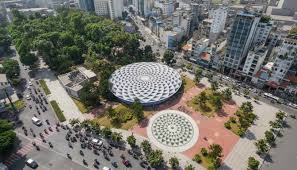
Ho Chi Minh City has recently approved the planning of five Transit-Oriented Development (TOD) areas along the Metro Line 2 (Ben Thanh - Tham Luong), covering a total area of nearly 940 hectares. This strategic move is aimed at optimizing urban development in proximity to the metro stations, which are expected to play a crucial role in the city's transportation network.
The first area, centered around the Ben Thanh station, spans approximately 188.57 hectares. It is bordered by major streets including Truong Dinh, Nam Ky Khoi Nghia, and Nguyen Trung Truc, and is adjacent to the Saigon River. The second area, near the Dân Chủ and Hòa Hưng stations, covers about 265.07 hectares and is surrounded by significant roads such as Hoang Van Thụ and Nhiêu Lộc Canal.
The third area, around the Nguyễn Hồng Đào station, is smaller, at 43.81 hectares, bordered by Cộng Hòa and Đồng Xoài streets. The fourth area, near the Bà Quẹo and Phạm Văn Bạch stations, encompasses 148.92 hectares, while the fifth area, which includes the Tham Luong depot, covers 292.81 hectares.
The TOD model focuses on developing urban spaces around public transport hubs, promoting high-density living, commercial, and public utility spaces within walking distance. This approach aims to reduce reliance on personal vehicles, minimize environmental pollution, and generate revenue from land value, which can be reinvested into public transport systems.
The Urban Development Management Board, under the Department of Planning and Architecture, has been tasked with surveying the current conditions and developing the planning scheme, ensuring data accuracy. The planning process is expected to take a maximum of four months from the approval of the study boundaries.
Ho Chi Minh City's Metro Line 2, which commenced construction on January 15, 2026, will stretch nearly 11.3 kilometers, connecting the city center to the northwest. It will feature ten underground stations, one elevated station, and one depot, with an anticipated completion date in 2030.