Trump Issues Threats During US-Iran Talks in Switzerland
In a tense atmosphere in Switzerland, former President Donald Trump issued threats towards the Iranian
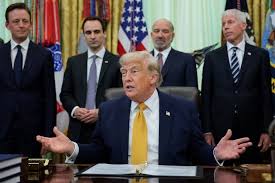
President Donald Trump has made it clear that he will take decisive action if Iran fails to comply with its agreement with the United States. Speaking to reporters on June 22, Trump stated, "If Iran does not comply with their agreement or if they do not behave properly, I will do what I have to do. As long as Iran respects us, we will not have any problems." This warning follows a series of negotiations between the U.S. and Iran in Switzerland.
Trump acknowledged that a renewed conflict with Iran would have significant economic repercussions but emphasized that preventing Iran from acquiring nuclear weapons is his top priority. He remarked, "Nuclear weapons are more important than an economic downturn." His comments come in light of Israeli Prime Minister Benjamin Netanyahu's assertion that Israeli forces would maintain a presence in southern Lebanon, which seemingly contradicts the military activity ban outlined in the Memorandum of Understanding (MOU) between the U.S. and Iran.
Last week, Trump and Iranian President Masoud Pezeshkian signed the MOU, just over three months after the U.S. and Israel conducted strikes against Iran. In retaliation, Tehran launched its own attacks on Israel and Gulf nations housing U.S. bases. Following the signing of the MOU, U.S. and Iranian delegations completed their first round of negotiations in a 60-day dialogue.
U.S. Vice President JD Vance reported that significant progress has been made in high-level talks between Washington and Tehran, addressing issues from the Strait of Hormuz to nuclear concerns, the Lebanon conflict, and the release of Iranian assets. A primary focus of the negotiations is ensuring the Strait of Hormuz remains open. Both parties have agreed to establish a conflict reduction mechanism involving Lebanon, mediated by Qatar and Pakistan.
On the nuclear front, Vance noted that Iran has consented to allow inspectors from the International Atomic Energy Agency (IAEA) to access and examine relevant facilities. Regarding the release of frozen Iranian assets, it has been proposed that the released funds be used solely for purchasing agricultural products from the U.S., such as soybeans, corn, and wheat, to meet the needs of the Iranian population.
Trump insisted that Iran must use the released funds to buy food from the U.S., stating, "All that money will come back in the form of food purchases that they desperately need. They have 91 million people and cannot feed them. Therefore, the money we unfreeze will go to our farmers." However, Iranian Central Bank Governor Abdolnaser Hemmati countered that Tehran is not obligated to purchase agricultural inputs from the U.S. under the current MOU, indicating that the remaining frozen funds could be used for other non-sanctioned goods.