
BIDV Launches '100-Day Digital Transformation' Support Package
The Investment and Development Bank of Vietnam (BIDV) has announced a significant support program for businesses and households in Hanoi as part of its '100-Day Digital Transformation' initiative. This program aims to facilitate digital transformation and provide financial solutions to enhance

Silver Prices Decline by Over Half a Million VND per Kilogram
Silver prices in Vietnam have weakened significantly, dropping by more than half a million VND per kilogram. This decline reflects broader trends in the precious metals market.

Gold Prices Surge as Global Market Strengthens
Gold prices continue to rise, narrowing the gap between domestic SJC gold and global gold prices to just over 4 million VND per tael. As of now, SJC gold is being bought at 141.1 million VND per tael and sold at 144.1 million VND per tael.

S&P 500 Little Changed Amid Hormuz Deal Talks, Intel Shares Drop
The S&P 500 index remained relatively unchanged as traders await a potential deal regarding the Strait of Hormuz, while Intel shares fell by 3%. The broader market reflects uncertainty amid geopolitical tensions and fluctuating oil prices.

Dividends Announcement for the Week of August 10-14, 2026
This week, nearly 16 companies are set to distribute cash dividends, with the highest payout reaching 100%. Key dates and amounts have been announced for several firms.

Silver Prices Surge on August 8: A Strong Week for Silver
On August 8, silver prices saw a significant increase, closing at $63.46 per ounce, marking a strong recovery after several weeks of volatility. This rise is attributed to weakening U.S. bond yields and a declining dollar, which have reduced the opportunity cost of holding non-yielding precious

Global Gold Prices Surge: Positive Outlook for Next Week
Gold prices have seen a significant increase this week, surpassing $4,300 per ounce. As the market looks ahead, upcoming U.S. economic data is expected to influence trends in the coming week.

Gold Prices Surge Ahead of U.S. Jobs Data
Gold prices have surged over 1% as they approach the $4,300 per ounce mark, marking the strongest weekly increase since the beginning of 2026. This rise comes as investors await key U.S. employment data.

Freddie Mac Reports Increase in 30-Year Mortgage Rates
Freddie Mac has reported that the average 30-year mortgage rate has risen to 6.69% this week, up from 6.66% last week. This marks an increase from 6.63% during the same week last year, indicating a continuing trend in rising mortgage rates.

Banks Race to Raise Capital with Bonds Offering 10% Interest
In a competitive effort to raise capital, Vietnamese banks are increasingly turning to bonds, with interest rates soaring to 10% as of early August. This marks a significant rise from 8% at the end of June and 9% in July.

Gold Prices Surpass $4,200 Amid Disappointing US Economic Data
Gold prices surged over $150 in a single session, surpassing $4,200 per ounce, reaching their highest level in six weeks. Silver prices also saw a significant increase, climbing above $62 per ounce.
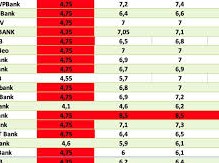
Bank Interest Rates Update: 10-Month Term Reaches 9.2%
As of August 4, 2026, bank interest rates in Vietnam have seen a significant increase, with the highest rate for a 10-month term reaching 9.2%. This surge reflects intense competition among banks to attract deposits.


