Iran's Military Strategy Amid Ongoing Conflict with the US
Iran is intensifying its military operations against US bases and regional states, framing its actions as
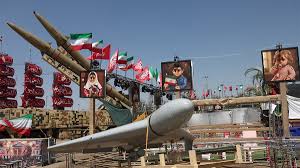
Iranian officials have recently suggested a transition from a defensive strategy to a more offensive approach, indicating that Tehran is ready to take more decisive actions to break the ongoing stalemate. This shift follows a large-scale offensive campaign launched by the U.S. and Israel against Iran on February 28, which has prompted Tehran to conduct attacks on various U.S. military bases and infrastructure in the Gulf region.
Iranian authorities assert that they are not the aggressors but are merely retaliating against the attacks from the U.S. and Israel. However, recent statements from Iranian officials have publicly acknowledged the possibility of pursuing a more proactive offensive policy while maintaining control over the Strait of Hormuz, a crucial factor in exerting pressure on the U.S.
Supreme Leader Mojtaba Khamenei outlined this direction during a restructuring of the military leadership in early August, calling for an "enhancement of deterrent capabilities and preparation for large-scale attacks against adversaries." A deputy commander of the Islamic Revolutionary Guard Corps (IRGC) stated last week that Tehran is adjusting its military doctrine to prioritize offensive operations.
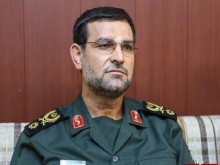
Mohammad Mokhber, an advisor to Khamenei, noted that the strategy of shifting conflict to an offensive stance, if Iran's conditions are not met, will undoubtedly alter the global balance of power. Mohammad Reza Naqdi, an advisor to the IRGC commander, emphasized the need for the IRGC to develop capabilities to conduct operations on enemy territory, stating, "We need to be able to redirect our activities to these areas as soon as ordered. The IRGC has been tasked with attacking the enemy in a smart, selective manner targeting specific objectives."
Sina Toossi, an expert from the Center for International Policy (CIP) based in the U.S., commented that the statements regarding the shift from defense to a readiness for proactive attacks do not imply that Iran will adopt a preemptive war doctrine. He believes that Iran has concluded it should escalate early and strongly if confrontation is unavoidable, rather than waiting for the U.S. or Israel to dictate the conditions of conflict.
Ahmad Zeidabadi, an international relations expert in Tehran, argued that this change reflects how Iranian officials assess the intentions of the U.S. government. Tehran believes that Washington may have dismissed the possibility of renewed hostilities and is seeking to maintain the status quo, which includes maritime blockades and economic pressure.
Diplomatic efforts between the two sides are currently at a standstill, especially after a ceasefire agreement collapsed, and the U.S. reimposed oil sanctions while continuing to blockade Iranian ports. Iran believes that diplomacy is likely to fail under the current circumstances, and the U.S. will not accept its conditions. Therefore, Tehran feels compelled to consider proactive attacks to force Washington to accept its terms and initiate a new round of negotiations.
Since the U.S. and Iran agreed to a ceasefire on April 8, the intensity of attacks from both sides has decreased, except for sporadic clashes in the Strait of Hormuz and surrounding areas. However, the conflict has spread throughout the Middle East, with fighting between the Houthi armed group in Yemen and Saudi Arabia affecting shipping routes through the Red Sea.
Iran increasingly believes that the U.S. military advantage does not guarantee control over escalating conflicts. The IRGC launched ballistic missiles targeting a U.S. base in Jordan on July 29, an attack that the U.S. Central Command (CENTCOM) described as "unexpected." Iranian media characterized the assault as an example of a "preemptive" approach.
Hossein Kanaani Moghaddam, a former IRGC general, explained that Iran's new strategy could include a combination of cyber warfare, psychological operations, intelligence activities, and economic warfare. However, expert Zeidabadi warned that Iran's calculations could lead to disaster for both the country and the entire Middle East. Toossi also cautioned that the new strategy poses a risk of future crises escalating much more rapidly.
The greater danger lies in a mutual deterrence trap, where both sides believe they must escalate further to pressure the other. This creates an environment with a much higher degree of strategic instability, even if neither side desires another large-scale conflict.