US Air Force Extends Service of B-1 and B-2 Bombers
The U.S. Air Force has announced an extension of the B-1 Lancer and B-2 Spirit bombers to enhance fleet
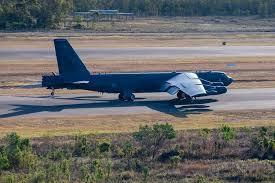
The U.S. Air Force has successfully fielded the IRIS satellite communications prototype on its B-52 Stratofortress bombers, significantly improving long-range connectivity for crews engaged in missions beyond line of sight. This advancement is part of ongoing efforts to enhance operational capabilities and mission execution during long-range strike operations.
Developed by Outerlink Global Solutions, based in Shreveport, IRIS integrates a satellite communications terminal with both aircraft and ground components. According to Maj. Gen. Ty Neuman, commander of the 8th Air Force and the Joint-Global Strike Operations Center, this system is crucial for maintaining reliable communication across vast distances, which is foundational for global operations.
The testing and fielding of IRIS advanced in early 2026, following successful ground and flight tests in March that demonstrated reliable airborne connectivity and the technical maturity required for operational deployment. The 49th Test and Evaluation Squadron, along with the 608th Air Operations Center, confirmed the system's end-to-end performance through approved network pathways.
By April 2026, several IRIS kits had been installed on B-52 aircraft and delivered to the 49th Test and Evaluation Squadron for training and operational use. The development of this system followed a $26 million funding agreement, transitioning from an initial demonstration in June 2022 at Barksdale Air Force Base, Louisiana, where voice and data transfers, including images and video, were assessed.
Maj. Gen. Peter Bonetti, director of the command’s Strategic Plans, Programs, and Requirements Directorate, emphasized the importance of partnership in making this capability possible. The collaboration involved various stakeholders who worked together to address the operational needs of the B-52 crews.
Despite its operational fielding, IRIS remains a prototype, with further testing and evaluation planned to inform its development and the command's decisions regarding long-term beyond-line-of-sight communications. The B-52 has been a vital asset for U.S. long-range strike and nuclear deterrence missions for over 70 years, and modern communications are essential to its continued effectiveness in meeting both current and future mission requirements.
Jackie Ford, the command’s Rapid Capabilities division chief, stated, “Rapidly fielding capabilities into our operators’ hands will ensure the B-52 remains ready not just for today’s mission, but for the missions of tomorrow as well.”