Customers ought to replace Google Chrome instantly to patch the vulnerabilities
As confirmed by Google researcher Prudhvikumar Bommana, the vulnerability CVE-2022-1364 is presently being
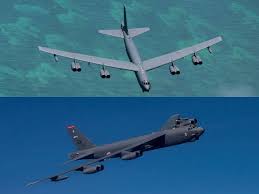
From 1960 to 1968, the United States Air Force implemented a strategy known as Chrome Dome, which involved keeping B-52 bombers carrying live nuclear weapons continuously airborne. This operation was crucial during the Cold War, as it aimed to prevent a potential Soviet first strike that could destroy US bombers on the ground before they could respond.
The logic behind this strategy was straightforward: by having bombers in the air at all times, they would be beyond the reach of any ground attack. During the Chrome Dome operations, between twelve and thirty B-52s were in the air at any given moment, each equipped with multiple hydrogen bombs and following pre-planned routes towards potential targets.
Chrome Dome missions primarily flew over four routes: the Mediterranean, the Atlantic approaches to Europe, the Arctic towards the Soviet Union, and along the eastern seaboard of the United States. The Arctic routes were particularly significant, as aircraft receiving a go-code from an airborne command post would proceed towards Soviet targets rather than returning.
The missions lasted up to 24 hours, requiring multiple refuels. The crews faced immense psychological pressure, knowing they were carrying fully functional nuclear weapons. A mechanical failure or miscommunication could potentially lead to a catastrophic situation.
On January 21, 1968, a B-52 on a Chrome Dome mission crashed near Thule Air Base in Greenland, scattering radioactive material across the ice. This incident, along with a previous accident in Palomares, Spain, raised serious concerns about the safety of the program and led to a diplomatic crisis, as Denmark was unaware that nuclear weapons were being flown in its territory.
Following these accidents, the political and safety implications of maintaining airborne nuclear patrols became untenable, leading to the termination of Chrome Dome in 1968. The program highlighted the risks associated with keeping nuclear weapons in the air continuously, which contradicted its original purpose of deterrence.
After the end of Chrome Dome, the US shifted to a ground-alert posture, where B-52s were kept fueled and armed, ready to launch within minutes but stationed on the ground. Additionally, submarine-launched ballistic missiles became a key component of the US nuclear deterrent strategy, providing a more secure and less visible option.
Over its eight years of operation, Chrome Dome saw thousands of missions flown with live nuclear weapons, often over civilian populations and international waters. Although no nuclear detonation occurred, the program remains one of the lesser-known episodes of Cold War history, illustrating the precarious nature of nuclear deterrence during that era.