U.S. Fighter Jets Launch from USS Abraham Lincoln
A recent video showcases U.S. fighter jets taking off from the USS Abraham Lincoln aircraft carrier,
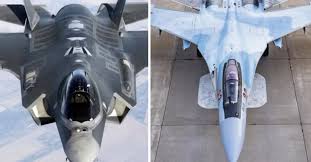
The air power of the United States and Russia is a topic of significant interest, especially as we look towards 2026. The U.S. Air Force (USAF) is recognized as one of the largest and most modern air forces in the world, featuring a vast array of fighter jets, strategic bombers, refueling aircraft, early warning planes, and military transport aircraft. This extensive fleet enables the U.S. to project power globally.
In addition to its size, the USAF benefits from fifth-generation stealth aircraft such as the F-22 and F-35, along with a sophisticated network of satellites and modern command, control, and data-sharing systems. The ability to coordinate effectively across various military branches further solidifies the U.S. Air Force's superiority in many combat scenarios.
On the other hand, the Russian Aerospace Forces (VKS) are also among the strongest air forces globally, with advanced fighter jets like the Su-35, Su-30SM, and Su-57, as well as strategic bombers such as the Tu-95, Tu-160, and Tu-22M3. Russia's strengths lie in its multi-layered air defense systems, long-range missiles, and the integration of air force capabilities with ground-based air defense.
When comparing the two forces, the U.S. has a numerical advantage in military aircraft, particularly in terms of refueling and strategic transport capabilities, which allows operations to be sustained over long distances. Technologically, the U.S. leads in stealth aircraft, networked warfare, and integrated command systems. Conversely, Russia excels in the maneuverability of its fighter jets, long-range air-to-air missiles, and its modern air defense network.
The operational capabilities of both air forces differ significantly. The U.S. Air Force is structured for expeditionary warfare, capable of deploying forces globally, while Russia focuses on national airspace defense and establishing superiority in strategically important regions.
Ultimately, air superiority is not solely determined by the number of aircraft or the technical specifications of each type of equipment. The effectiveness of combat operations also depends on the quality of pilots, command capabilities, logistics, intelligence, and the ability to coordinate among various forces. In a real-world scenario, outcomes would also hinge on terrain, mission objectives, electromagnetic spectrum control, air defense systems, and the capacity to sustain operations over extended periods. Therefore, it is challenging to definitively assert which side would hold absolute superiority based solely on equipment comparisons.