Governor Urges Banks to Leverage Data for Easier Access to Capital
The Governor of the State Bank of Vietnam, Pham Duc An, has urged credit institutions to utilize data to
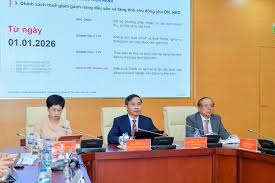
On September 18, 2026, in Hanoi, the State Bank of Vietnam (SBV) held a conference titled "Enhancing Access to Credit for Small and Medium-Sized Enterprises" in collaboration with the Vietnam Association of Small and Medium Enterprises. The event was conducted both in-person and online, with the SBV Governor, Pham Duc Anh, presiding over the meeting.
The conference focused on the challenges SMEs face in accessing credit, identifying bottlenecks in mechanisms, policies, processes, and credit products. It also aimed to clarify issues from the enterprises' side, such as financial transparency and capital absorption capabilities.
According to Deputy Governor Nguyen Ngoc Canh, SMEs account for approximately 98% of all operating enterprises in Vietnam and play a crucial role in job creation, production, and socio-economic development. The government recognizes that businesses and entrepreneurs are key drivers in building and developing the economy, with the private sector being a vital component of economic growth.
Recently, several policies and solutions have been implemented to promote the development of SMEs, including the Law on Supporting Small and Medium Enterprises, which provides a significant legal foundation for these businesses.
As of August 28, 2026, total credit outstanding in the economy reached nearly 20.5 million trillion VND, marking a 10.24% increase from the end of 2025. In contrast, credit for SMEs has seen a higher growth rate, with over 100 credit institutions reporting outstanding loans in this sector, totaling over 4.1 million trillion VND, which is about 20% of the total credit outstanding in the economy.
From the beginning of the year until the end of August, the cumulative disbursement for SMEs reached over 3.8 million trillion VND. The trade and service sector constitutes the largest proportion of this debt, accounting for 70.48%. Notably, four state-owned commercial banks hold approximately 1.3 million trillion VND, representing 32.6% of the total credit for SMEs.
These figures indicate that credit flows are increasingly directed towards small and medium enterprises, amidst a growing demand for support for the private economic sector. The number of banks participating in preferential lending programs has increased from 4 to 19, with the total scale of these programs exceeding 407 trillion VND, compared to an initial registration of 220 trillion VND.
Loans under these programs offer interest rates at least 1% lower than the average rates for similar terms, with some programs providing rates reduced by 1-2% per year. Various banks are launching specific credit packages. BIDV has allocated 25 trillion VND for short-term loans in its "SME Fast Track 2026" program, targeting businesses transitioning from household operations to enterprises, exporters, and those joining supply chains.
Vietcombank aims to onboard nearly 2,000 new SME clients, with disbursement figures for the first eight months nearing 10 trillion VND. Agribank is implementing the "Prosperity with SMEs" program, which has a scale of 100 trillion VND. SHB is offering loan packages with interest rates starting from 6.2% per year, with limits up to 10 billion VND.
Despite these efforts, access to capital still faces challenges due to many SMEs being small in scale, with limited equity and inconsistent management capabilities. Additionally, financial information and cash flow are often insufficiently transparent, and business plans may lack feasibility.
Moving forward, the SBV intends to continue directing credit towards production, business, and priority sectors, including SMEs. Credit institutions are required to improve processes, enhance data sharing, and evaluate credit based more on business plans, cash flows, and credit histories, gradually reducing reliance on collateral.