Saudi Arabia Shuts Key Oil Pipeline After UAV Attack
Saudi Arabia has closed its East-West oil pipeline following a UAV attack from Iraq. The Energy Ministry
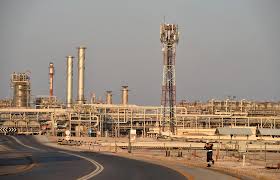
Saudi Arabia is facing a new challenge as its East-West Pipeline, a vital oil transport route designed to circumvent the Strait of Hormuz, has been attacked and subsequently shut down. On September 11, Saudi authorities reported that the Petroline pipeline suffered multiple attacks the previous day, leading to its closure as a precautionary measure. The assaults, carried out by drones launched from Iraq, resulted in material damage and injuries, although officials have not disclosed the full extent of the damage or when the pipeline might resume operations.
Satellite images revealed significant damage to a pumping station along the pipeline, with another station showing signs of fire and large smoke plumes in photographs taken on September 10. The Petroline pipeline is crucial for Saudi Arabia as it transports oil from eastern production areas to the port of Yanbu on the Red Sea, allowing the country to export oil without relying on the Strait of Hormuz, which is affected by ongoing conflicts between the U.S. and Iran.
Bob McNally, president of the geopolitical consulting firm Rapidan Energy Group, told CNN, "It would be a real disaster if Petroline is not repaired and operational again soon. This is the most important route, far surpassing others, for Saudi Arabia to redirect its crude oil flows." The recent events have raised questions about the safety of alternative routes to bypass Hormuz, especially as the energy market faces pressure from Middle Eastern conflicts. Unlike oil tankers that can change their routes, pipelines and pumping stations are fixed infrastructures that can become direct targets.
Anne-Sophie Corbeau, an expert at Columbia University’s Center on Global Energy Policy, remarked to the BBC, "Recent attacks show that the options used to avoid the Strait of Hormuz may not be as useful as expected because they can be destroyed." The Petroline, which spans 1,200 kilometers and was initiated in 1981, consists of two pipelines with diameters of 1.2 meters and 1.4 meters, connecting the Abqaiq oil processing complexes in the Eastern Province to Yanbu on the Red Sea. Initially, Petroline had a capacity of 5 million barrels per day, which was later increased to 7 million barrels per day, with 2 million barrels allocated for domestic refining and the remainder for export.
From April to June, Saudi Arabia’s crude oil exports through Yanbu exceeded 4 million barrels per day, accounting for approximately 4% of global oil supply, according to data platform LSEG. Following the Houthi forces in Yemen declaring a blockade against Saudi oil tankers in late July, Riyadh's oil exports fell to 1.1 million barrels per day in August.
During the pipeline's downtime, Saudi Arabia can still maintain exports from Yanbu using stored oil. Data platform Kpler estimated that on September 14, about 9 million barrels remained in storage at Yanbu, while the total capacity of the storage tanks there is approximately 24 million barrels. Analyst Janiv Shah from Rystad Energy noted that this amount would suffice for about three days of exports, with actual durations varying between 2 to 6 days depending on loading speeds. Saudi Arabia could also draw on additional reserves from facilities in Egypt to extend exports by about a week.
"A short-term incident typically has little impact on the market. However, if the disruption is prolonged, refineries in Europe and Asia dependent on Saudi oil may have to reduce output while seeking alternative sources," stated June Goh, an analyst at Sparta Commodities. Another complication is the type of oil transported via Petroline, which primarily carries medium sour crude (oil with sulfur content and average density). Finding an equivalent oil source for replacement is not straightforward.
Shah pointed out that the recent surge in oil prices indicates that the market has begun reacting to the significant supply drop. Saudi Arabia is working to restore part of the system in the coming days. Since Petroline consists of two parallel pipelines with separate pumping systems, Saudi Arabia may be able to bring one line back into operation after safety inspections while continuing repairs on the other.
Homayoun Falakshahi, an analyst at Kpler, mentioned that repairs to the pipeline could take 4 to 6 weeks due to the unavailability of replacement parts and disruptions in the supply chain. The Petroline was previously attacked in April, causing damage to a pumping station and reducing capacity by about 700,000 barrels per day. At that time, Saudi Arabia restored full capacity in less than a week.
Salvatore Mercogliano, a maritime history professor at Campbell University in North Carolina, noted that Saudi Arabia could still utilize the route through the Strait of Hormuz. "If Petroline were the only way for Saudi Arabia to get oil to market, the situation would be truly serious. However, the route through Hormuz is largely operational again, so this is not a fatal blow to Saudi Arabia. They can still get oil to market," he told the Associated Press.