Vietnam's Tô Lâm Meets with President Putin in Moscow
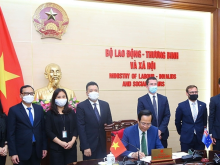
Vietnam's General Secretary and President Tô Lâm held significant talks with Russian President Vladimir
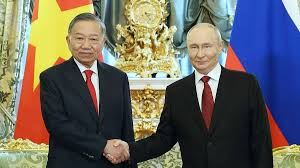
In a significant meeting held on September 9 at the Kremlin, Russian President Vladimir Putin reaffirmed Vietnam's status as a priority partner in Russia's foreign policy, particularly in the Asia-Pacific region. This meeting with Tô Lâm, the General Secretary and President of Vietnam, marks a new milestone in the traditional friendship and comprehensive strategic partnership between Vietnam and Russia.
President Putin expressed that Vietnam is a reliable partner and emphasized the importance of the bilateral relationship, which has been nurtured through mutual support and cooperation over the years. Tô Lâm acknowledged the substantial assistance and cooperation provided by Russia, particularly during Vietnam's struggle for independence and its ongoing development efforts.
The leaders discussed enhancing economic cooperation, aiming to elevate bilateral trade to $15 billion. They agreed on the need for both countries to encourage their businesses to strengthen connections, expand investments, and develop new production and supply chains in various sectors, including large-scale food industry, seafood processing, and consumer goods manufacturing.
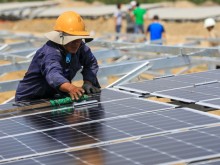
Energy and oil remain crucial pillars of the Vietnam-Russia strategic partnership, with plans to expand into new energy sectors such as nuclear and renewable energy. Both leaders highlighted the importance of peaceful nuclear energy cooperation, which could mark a new chapter in their bilateral relations.
Furthermore, they agreed to bolster defense and security cooperation, addressing non-traditional security challenges and enhancing collaboration in areas such as high-tech crime and emergency response.
Tô Lâm invited President Putin to consider visa exemptions for Vietnamese citizens and proposed organizing a 'Russian Culture Season in Vietnam' in 2027. The two leaders also discussed the importance of maintaining international peace and stability, advocating for multilateralism and the role of the United Nations.
In conclusion, the meeting underscored the commitment of both nations to deepen their strategic partnership and promote mutual development in various fields, paving the way for future cooperation.