Explosion in Crimea Leaves Many Dead, Suspected Assassination
An explosion in Crimea has resulted in multiple fatalities, raising suspicions of an assassination attempt.
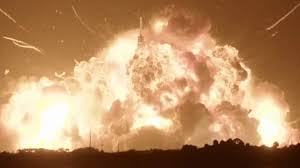
The explosion of Blue Origin's New Glenn rocket at Cape Canaveral, Florida, in May has had far-reaching effects, creating a sonic boom that traveled over 1,600 kilometers across the United States. According to Live Science, the incident occurred during a static fire test and was powerful enough to be compared to the catastrophic Chernobyl reactor explosion of 1986.
While the human ear cannot detect the extremely low-frequency sound waves produced by such explosions, researchers have utilized the vibrations to conduct detailed analyses of the event. Fortunately, no injuries were reported, but thousands of local residents described hearing a loud noise similar to thunder, attributed to the shockwave that extended up to 217 kilometers from the launch pad.
In a study published on August 12 in The Seismic Record, scientists from Sandia National Laboratories analyzed data from specialized listening stations across the country to identify signs of infrasound (sound waves with frequencies below 20 Hz, inaudible to humans) at the time of the explosion. At least 36 stations detected infrasound signals from the blast, with the furthest being in northeast Texas, approximately 1,684 kilometers away from Cape Canaveral.
Dr. Elizabeth Silber, a physicist and planetary scientist at Sandia, noted that the detection of such low-frequency sound waves highlights the scale of the explosion and offers researchers a rare opportunity to analyze a large energy event in detail. Based on the frequency and distance of the sound waves, they estimated the explosion had the equivalent power of 131 tons of TNT, slightly exceeding the force of the original explosion that destroyed the Chernobyl nuclear reactor.
The research team also estimated the amount of fuel consumed in the explosion. Although Blue Origin did not disclose the exact amount of propellant used in the booster stage, they estimated that approximately 3-6% of the rocket's cryogenic propellant was expended. While this percentage may seem low, especially considering the size of the fireball, it falls within the expected range according to researchers.
Silber explained that in major accidents, fuel and oxidizers do not necessarily mix and react simultaneously. Some materials may contribute to the initial explosion, while others may burn gradually in the fireball and smoke.
The New Glenn rocket, which stands at 98 meters tall, is the largest and most powerful commercial rocket developed by Blue Origin. It is designed to compete with SpaceX's massive Starship and has successfully flown into space three times in January, November 2025, and April 2026. During its second launch, Blue Origin successfully landed the rocket's reusable booster, becoming the second company to achieve this feat after SpaceX.
However, on May 29, during a static fire test at Cape Canaveral, just before its fourth launch, the rocket's booster exploded violently, sending flaming debris into the sky and creating a massive mushroom cloud that illuminated the night sky. On August 5, Blue Origin revealed that a faulty oxygen valve may have caused the incident. This explosion is one of the most powerful pre-launch explosions ever recorded.
According to Ars Technica, Blue Origin may take at least a year to repair the damage at the launch pad. The explosion not only affects the company's rocket launch capabilities but may also delay NASA's lunar base construction, which relies on New Glenn to launch several components.
Infrasound is a familiar method for detecting large explosions and significant atmospheric events, such as the 2022 Hunga Tonga-Hunga Ha'apai volcanic eruption. The Comprehensive Nuclear-Test-Ban Treaty Organization (CTBTO) uses infrasound as one of its primary monitoring techniques to detect nuclear tests. The study's findings indicate that infrasound analysis could be useful for monitoring anomalies during rocket launches and provide valuable information about the infrasound signals generated by increasingly common liquid oxygen/methane fuel in heavy-lift space rockets.