Several Districts in Ho Chi Minh City Propose to Maintain Current Borders
Despite not meeting the proposed area standards, several districts in Ho Chi Minh City, including Saigon,
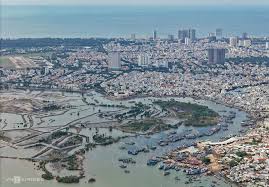
Ho Chi Minh City has proposed to maintain all 168 administrative units, including wards and districts, to ensure stability in local governance as the new two-tier local government model has been in operation for over a year. The proposal was presented in a report regarding the implementation of directives from the City Party Committee on the arrangement of social administrative units.
The city government stated that the operations within these wards and districts have been fundamentally stable, with no significant irregularities necessitating boundary adjustments. Since July 2025, the city has decentralized and delegated more than 1,000 tasks across nine sectors, while also enhancing online public services to reduce time and costs for citizens and businesses.
Maintaining the current administrative boundaries is also aimed at avoiding disruptions to the administrative apparatus, personnel, assets, and administrative data. If further mergers were to occur, residents and businesses would need to update numerous documents and information, potentially affecting urban planning, land clearance, and the timelines of key projects.
Previously, after a self-assessment, 165 out of the 168 administrative units proposed to keep their current status. Among these, 54 areas did not meet one of the two criteria regarding area and population. Specifically, 52 units have populations above 30,000 but do not meet the area requirement, with 48 wards covering less than 5.5 square kilometers and four districts under 30 square kilometers.
The remaining two units, Thanh An Commune and Con Dao District, have not met population standards but have areas of over 75 square kilometers and are geographically isolated. The city government assessed that these units do not require a reevaluation of their standards.
All 168 administrative units were established on July 1, 2025, prior to the enforcement of Resolution 112 by the National Assembly Standing Committee regarding administrative unit standards, which takes effect in early 2026. According to the transitional provisions of this resolution, units formed before this date are exempt from reevaluation.
Meanwhile, four communes—Long Hai, Binh Chanh, Ba Diem, and Hoc Mon—are developing proposals to establish wards while maintaining their current boundaries. Upon becoming wards, these areas will adhere to the standard area requirement of 5.5 square kilometers or more.
Additionally, the central government is researching a new model for social administrative units, expected to be completed by October 2026. Therefore, the HCMC government believes it is prudent to await new principles and criteria for a comprehensive evaluation.
For Xom Chieu Ward, Khanh Hoi Ward, and Long Son Commune, which have proposed mergers with neighboring localities, the city government indicated that the documentation does not reflect adequate consultation and consensus from the involved areas. Consequently, the HCMC government has recommended retaining all 168 wards, communes, and districts.
From 2026 to 2030, the city will continue to refine the two-tier local government model, enhance decentralization, digitize processes, reform administrative practices, and restructure the workforce to align with the scale and characteristics of each locality.
After merging with Binh Duong and Ba Ria - Vung Tau, Ho Chi Minh City now spans nearly 6,800 square kilometers with a population of approximately 16 million, according to data provided by the HCMC Police on June 1. Among the 168 administrative units, Phu Giao is the largest at 192.83 square kilometers, while Di An Ward has the highest population with over 227,800 residents.