Oreshnik Missile: Russia's Strategic Deterrent to the West
The introduction of the Oreshnik medium-range ballistic missile is seen as a strategic move by Russia, aimed
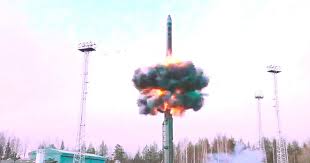
On August 29, 2026, Russia conducted a successful test launch of an intercontinental ballistic missile (ICBM), which saw a test warhead deployed from the Plesetsk Cosmodrome in Arkhangelsk to the Kura test range on the Kamchatka Peninsula. The Russian Ministry of Defense stated that this launch was part of a strategic exercise designed to evaluate the deployment and operational capabilities of a mobile ICBM unit.
While the specific type of missile used in the test was not disclosed, local sources suggest that it was likely a Yars missile. The exercise involved moving a mobile missile launch battery to a remote area, preparing for the launch, and executing the test. The Ministry of Defense confirmed that all assigned tasks were completed successfully, and the results validated the missile's operational capabilities and flight characteristics.
Russia currently possesses the world's largest deployed ICBM arsenal, which includes both fixed silo-based systems and mobile ground-based systems. Most Yars missiles are deployed in a mobile manner, allowing for continuous dispersal and repositioning, making it more challenging for adversaries to detect and target them before launch.
This ICBM launch was announced just four days after CIA Director John Ratcliffe's visit to Moscow, where tensions between Russia and NATO were reportedly discussed. Recently, Western nations have expressed increasing concern over potential Russian responses to escalating attacks from Ukraine targeting key cities and infrastructure within Russia.
One scenario discussed includes Moscow attacking supply chains within NATO territories that support Ukraine's military operations, or employing tactical nuclear weapons against targets inside Ukraine. Russia's strategic nuclear arsenal, including systems like the Yars, has been recognized by NATO officials as a critical factor in deterring Western nations from initiating a larger-scale conflict against Russia.
Russian nuclear forces are expected to continue playing a vital role in preventing NATO from escalating the current conflict into a full-scale war, especially if Moscow undertakes limited escalatory steps. The latest ICBM test, believed to be related to the Yars system, reinforces Russia's strategic deterrent capabilities.
This launch follows the earlier testing of the Sarmat ICBM, a significantly larger silo-based missile, in May. The Sarmat is designed to carry multiple warheads and is believed to be compatible with the Avangard hypersonic glide vehicle, which enhances its maneuverability during atmospheric flight, complicating missile defense systems' detection and interception efforts.
According to General Sergey Karakaev, commander of Russia's Strategic Missile Forces, the first missile regiment equipped with the new Sarmat system is expected to receive this weapon by the end of the year. If this timeline is met, it would mark a significant milestone in Russia's transition to a new generation of strategic missiles.
Thus, the Yars launch serves not only as a technical test but also as a message regarding Moscow's ability to maintain its strategic nuclear deterrent amid escalating tensions with NATO.