Vietnam's National Assembly to Consider Abolishing Supreme People's Procuracy Investigation Agency
The National Assembly of Vietnam is set to discuss the potential abolition of the investigation agency of
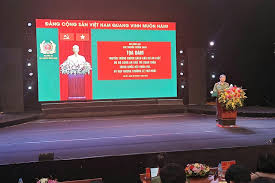
The Ministry of Public Security in Vietnam has introduced a proposal to expand criminal liability to include individuals who have merely the intent to commit a crime. This initiative is part of the draft amendment to the Penal Code, which is currently being discussed in a special session of the National Assembly.
On August 26, the Department of Communication of the Ministry of Public Security organized a seminar to discuss policy communications regarding the draft laws led by the Ministry. The two key legislative projects under consideration are the amended Penal Code and the amended Law on the Organization of Criminal Investigation Agencies.
Colonel Ngo Duc Thang, Deputy Director of the Department of Legal Affairs and Administrative Reform, stated that the aim of this proposal is to prevent crime at its inception, before any serious consequences arise. The proposal specifically targets 13 serious and particularly serious offenses, which, if not addressed early, could lead to catastrophic outcomes.
For instance, Colonel Thang cited a scenario where a group of individuals gathers and prepares dangerous weapons. If this group is not intercepted in time, they could potentially carry out acts of murder, resulting in severe consequences. The drafting agency has recognized that many actions need to be prevented at the preparatory stage.
The proposed expansion of criminal liability focuses on offenses related to economic management, public safety, public order, and drug-related crimes. Colonel Thang emphasized that simply having the intention or thought of committing a crime does not automatically lead to criminal liability. Intent must be manifested through objective actions, such as preparing tools or means to commit the crime.
Concerns have been raised about the potential for this regulation to lead to excessive criminal prosecutions. However, Colonel Thang assured that any consideration of criminal liability must strictly adhere to the authority, procedures, and regulations outlined in the Criminal Procedure Code. The prosecuting authorities cannot base their decisions on isolated indications of intent.
According to Colonel Thang, past practices in handling preparatory criminal actions have ensured that the right individuals are prosecuted in accordance with the law, and there have been no cases of wrongful prosecution. The expansion to include 13 specific offenses is expected to help prevent crime early, before irreversible or unmanageable consequences occur.