Ukrainian Drone Attack Claims Seven Lives on Russian Beach
A tragic drone strike by Ukraine has resulted in the deaths of seven people on a crowded beach in
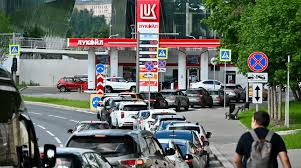
In the wake of over four and a half years of conflict in Ukraine, Russia's economy has presented a paradox, defying many pessimistic forecasts. Recent reports indicate that while the official figures show a slow growth in the economy, underlying issues such as high military expenditures and inflation are increasingly evident.
According to Alex Kolyandr, Director for Europe at Eurasia Group, the economic picture of Russia is characterized by a 'two-tier' structure. While sectors related to military production are thriving, other areas are facing significant challenges. Recent drone attacks by Ukraine on Russian oil refineries have further exposed these weaknesses.
In the second quarter of 2026, Russia's GDP grew by 1.3% compared to the same period last year, marking the first quarterly growth since 2023. Overall, the GDP for the first half of the year increased by 0.6%, surpassing government and central bank forecasts. This growth is attributed to military-industrial spending and rising oil prices due to Middle Eastern tensions.
However, analysts are more concerned about two critical indicators: budget deficits and inflation. Charles Lichfield, Director of Analysis at the GeoEconomics Center of the Atlantic Council, noted that Russia is on track to record a budget deficit significantly higher than last year, with projections indicating that the deficit for 2025 could be double that of 2024. Energy revenues, which are crucial for the Russian budget, have diminished, with oil and gas revenues in the first half of 2026 being only 64% of what they were two years prior.
Furthermore, inflation, which had been brought down to near the 4% target by the end of the previous year, is now under pressure again due to rising fuel prices and high public spending. Retail giant X5 Group has reported that consumers are increasingly turning to cheaper food options, reflecting the strain on household incomes.
The Kremlin faces the challenge of sustaining military operations without overly depleting the civilian economy. The government may consider increasing taxes on oil companies, borrowing more, or utilizing foreign reserves that have not been frozen by Western sanctions. However, tapping into reserves carries risks, as it could undermine confidence in the central bank's commitment to controlling inflation.
Despite these pressures, experts do not anticipate that economic challenges will force Russia to cease military operations soon. Elina Ribakova from the Peterson Institute for International Economics stated that the situation would need to deteriorate significantly before it impacts Moscow's decision-making. If oil prices were to fall to $35-40 per barrel for an extended period, the narrative might change. However, ongoing tensions in the Middle East continue to provide Russia with resources to maintain its operations.
Some analysts even warn that a weakening economy could lead the Kremlin to escalate its military efforts rather than retreat, as they may seek to achieve military objectives before financial pressures become overwhelming.