Japanese Yen Surges, Possible Government Intervention Speculated
The Japanese yen experienced a significant surge on July 30, marking its largest increase against the US
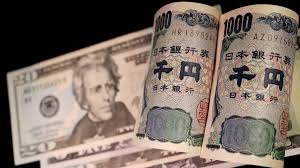
The Japanese yen is experiencing a continued decline in value, even after a historic intervention aimed at stabilizing the currency. As of August 12, 2023, the exchange rate reached 159 yen per U.S. dollar, reflecting a substantial loss since the coordinated intervention between the U.S. and Japan two weeks prior, when the rate briefly improved to 155 yen per dollar.
Market analysts attribute this ongoing depreciation to persistent capital outflows from Japan, as investors seek higher returns in the United States. Jesper Koll, Director at Monex Group, pointed out that while the intervention may have temporarily alleviated excessive speculation, it cannot alter the fundamental financial principle that money will flow to where it earns the highest returns. As long as Japan's interest rates remain lower than those abroad, the trend of carry trade—borrowing in yen to invest in higher-yield currencies—will persist.
For decades, while central banks worldwide tightened monetary policies, Japan maintained a loose monetary stance, making the yen an attractive target for such trading strategies. Currently, Japan's interest rate stands at just 1%, significantly lower than the U.S. rate of 3.5% to 3.75%. This disparity is compounded by rising U.S. Treasury yields and high oil prices, the latter being particularly detrimental to Japan, which relies heavily on energy imports.
Despite the intervention's success in curbing excessive speculation and shifting market sentiment, experts like Masahiko Loo from State Street Global Advisors believe that the measures have not eliminated the advantages supporting the U.S. dollar. The yield on 10-year U.S. Treasury bonds is currently at 4.686%, nearly double that of Japanese government bonds of the same maturity, creating a strong incentive for investors to favor U.S. debt.
The focus is now shifting to the Bank of Japan (BOJ), which is set to hold its next monetary policy meeting in September. Koll noted that the market's surprise lies not in the intervention itself but in the BOJ's hesitance to tighten its policy. This raises questions about whether concerns over Japan's banking system or its massive public debt are hindering decisive action. If Japanese interest rates do not increase or U.S. rates do not adjust, investors will likely continue to move their funds abroad.
John Wood, Asia Investment Director at Lombard Odier, suggests that the recent intervention may only have a limited effect. He argues that the BOJ may need to raise rates at least two more times to effectively halt the yen's decline. However, Crédit Agricole CIB points to a deeper issue: an "asymmetry of investment capacity" between the two economies, with large-scale investments in AI and other projects in the U.S. attracting capital away from Japan.
To achieve a sustainable recovery of the yen, Japanese assets must become more attractive to encourage domestic savings to remain in the country rather than flow overseas. Currently, interventions are merely a stopgap measure to prevent a rapid decline in the yen's value rather than reversing the trend. Loo indicates that 160 yen per dollar is a critical threshold; if the rate surpasses this level quickly, further intervention may be necessary. He does not rule out the possibility of additional interventions, especially if the exchange rate becomes volatile.
Washington has mechanisms in place to provide USD liquidity backed by U.S. Treasury bonds, which could reduce Japan's need to sell its holdings to fund interventions. While this may make betting against the yen more costly, it does not eliminate carry trade activities. As Koll concludes, it is easy to intimidate the market, but reversing the trend requires changing incentives and building trust.