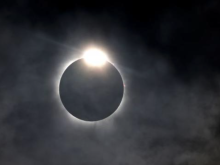
Rare Total Solar Eclipse Set for August 12
A rare total solar eclipse will occur on August 12, casting a shadow across parts of Europe, North Asia, and
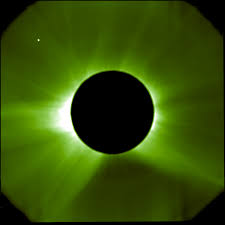
The European Space Agency (ESA) is preparing for a total solar eclipse that will occur on August 12, 2026, affecting parts of Europe, including Greenland, Iceland, Spain, and Portugal. During this event, the Sun's bright disc will be obscured, allowing the solar corona to become visible. However, total solar eclipses are rare and last only a few minutes, which limits the opportunity for scientists to study the Sun's outer atmosphere.
To address this challenge, ESA has developed missions that create artificial eclipses and employs computer models for digital simulations. One of the key instruments in this endeavor is the Proba-3 mission, which consists of two satellites that operate together to mimic a solar eclipse. The Occulter satellite blocks the Sun's light, allowing the Coronagraph satellite to capture detailed images of the solar corona for extended periods.
Andrei Zhukov, the principal investigator for the ASPIICS instrument at the Royal Observatory of Belgium, noted that Proba-3 has successfully conducted numerous artificial eclipses, with the most recent one occurring just weeks before the natural eclipse. This timing allows scientists to predict the appearance of the corona during the actual event, as the Sun's rotation means that its features remain relatively stable over a two-week period.
In addition to Proba-3, ESA's Solar Orbiter mission is also preparing for the eclipse by conducting a special observation campaign. This mission provides unique data that helps verify whether computer simulations of the Sun's magnetic environment are accurate. Jorge Amaya, ESA Space Weather Modelling Coordinator, emphasized the importance of total solar eclipses in validating these models against real observations.
The Solar Orbiter's unique trajectory allows it to observe the Sun from different angles, providing a more comprehensive understanding of its magnetic field. This information is crucial for predicting how solar activity may impact technology on Earth.
As the August 12 eclipse approaches, ESA is collaborating with Predictive Science Inc. to create accurate predictions of the solar corona's appearance. For those unable to witness the eclipse in person, ESA will host a live broadcast of the event. It is important to observe safety precautions when viewing a solar eclipse, including using certified eclipse glasses to protect against eye damage.