Total Solar Eclipse Began in Texas, Traversed the US Midwest and New England
A once-in-a-lifetime astronomical event occurred on August 21st as a total solar eclipse swept across the
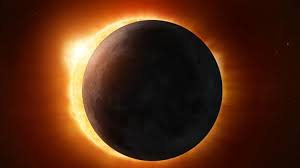
A rare total solar eclipse is set to take place on August 12, 2023, with its path stretching across parts of Europe, North Asia, and North America. According to the Hanoi Astronomy Society, the eclipse will be visible in the early hours of August 13 (Hanoi time), but Vietnam will not be able to observe this event.
Many areas in Europe will experience a moment of darkness as the continent witnesses its first total solar eclipse in nearly three decades, since 1999. The path of totality, where the moon completely covers the sun, will be about 100 to 200 kilometers wide, creating a twilight effect during the day.
Specific locations in northern Russia, Greenland, Iceland, Spain, and a small part of Portugal will have the opportunity to witness the total eclipse. Meanwhile, the UK and Ireland will experience a significant partial eclipse, with the moon obscuring 90% to 96% of the sun, resulting in a deep sunset effect rather than complete darkness. In the northern United States, from Alaska to North Carolina, residents will also see a partial eclipse.
The total solar eclipse occurs when the moon is positioned directly between the Earth and the sun, temporarily blocking the sun's surface from view. This alignment creates a dark disk in the sky, surrounded by a faint halo known as the corona. The moon is approximately 400 times smaller than the sun but is also about 400 times closer to Earth, making both celestial bodies appear similar in size from our perspective.
For a total eclipse to occur, the sun, moon, and Earth must be perfectly aligned in space. The shadow cast by the moon during this alignment has a central part called the umbra. Observers located within the umbra will experience totality, while those in the penumbra, or the outer part of the moon's shadow, will see a partial eclipse.
The eclipse on August 12 will begin with a partial phase lasting about an hour, during which the moon will gradually cover the sun's surface. This will be followed by a brief total phase before the sun re-emerges. The entire event will last approximately two hours.
After noon on August 12, two NASA pilots will take off from Keflavik Airport in western Iceland to capture images of the sun while flying along the eclipse's path. The aircraft will head north towards Greenland and then curve south along a 64-kilometer arc off the coast of Iceland. Although this is a mission to chase the eclipse, the moon's shadow will be moving at over 3,200 kilometers per hour across the ocean below. The pilots aim to reach the point of maximum eclipse, when the moon obscures most of the sun, just as the shadow catches up with the plane.
Through data collected from the solar images, scientists hope to gain insights into space weather, charged particles, and radiation that could threaten astronauts, satellites, power grids, and communication networks on Earth.