Iran Claims to Have Darkened U.S. Air Defense Systems in the Middle East
Iran has announced the destruction of multiple U.S. radar and communication systems in the Middle East,
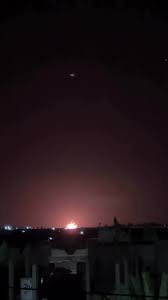
Recent developments in missile technology and tactical strategies have prompted serious concerns regarding the effectiveness of U.S. Patriot defense systems against Iranian missile attacks. On July 21, the Islamic Revolutionary Guard Corps (IRGC) announced that they had created a "dark night" for U.S. air defenses in the Middle East, successfully attacking multiple radar installations, telecommunications centers, and deployed Patriot systems in Kuwait and Bahrain.
The IRGC stated that these strikes were designed to pave the way for large-scale operations in the future, removing obstacles to accurately targeting U.S. military installations. In a series of attacks on the Muwaffaq al-Salti military airbase in Jordan, Iranian ballistic missiles reportedly penetrated Patriot defenses, resulting in casualties among U.S. personnel.
Satellite imagery analysis revealed that significant structures at the Muwaffaq al-Salti base were constructed only after the onset of hostilities in late February, suggesting that Iran may have been monitoring the construction process in near real-time. This capability undermines the operational secrecy that U.S. forces have relied upon due to geographical distance and secure intelligence.
Experts have noted that Iran's recent missile strikes have considerably weakened the air defense architecture that the U.S. and its Gulf partners have built over decades. A report by ABC News indicated that at least ten radar installations in the Middle East were hit by Iranian drones and missiles within the first three weeks of the conflict, including advanced radar systems crucial for missile defense.
According to U.S. officials, the attacks have demonstrated that Iran still possesses a substantial missile arsenal, enabling them to exert pressure on multiple fronts and threaten U.S. military bases throughout the region. The IRGC has adapted its strategies, employing high-speed missiles with enhanced maneuverability to evade detection and interception by U.S. defense systems.
Recent missile models like the Fattah-1 and its upgraded variant Fattah-2 are reported to have high speed and maneuverability, complicating interception efforts for systems like Patriot and THAAD. Additionally, Iran has shifted its tactics from launching mass attacks to deploying smaller salvos from dispersed launch platforms, allowing for sustained pressure on U.S. defenses while minimizing the risk of preemptive strikes.
The integration of ballistic missiles with low-cost suicide drones, such as the Shahed-136, has further complicated the U.S. air defense response, creating a situation where prioritizing targets becomes necessary, potentially leaving dangerous threats unaddressed. This evolving threat landscape has led to a reassessment of U.S. military deployments and defensive strategies in the region.