Global Oil Prices Surge Over 15% Amid Rising Tensions
Oil prices have seen a significant increase this week, with WTI rising by 15.5% and Brent by 15.9%. The
As of 18:00 on July 20, 2026, global oil prices have experienced a notable increase. West Texas Intermediate (WTI) crude oil is priced at $81.82 per barrel, reflecting a slight rise of $0.04, or 0.05%. Meanwhile, Brent crude oil is trading at $88.58 per barrel, up by $0.48, or 0.54%.
The upward trend in oil prices follows a weekend marked by renewed airstrikes between the United States and Iran, which have heightened fears of a broader conflict in the Middle East that could disrupt global oil supplies. The ongoing clashes are particularly concentrated around the Strait of Hormuz, a critical transit point for oil shipments, where transportation activities have been significantly hampered, leading the market to factor in additional risk premiums.
According to the Ministry of Industry and Trade, the current fluctuations in the global oil market are influenced by several key factors. These include the resurgence of U.S.-Iran military engagements, the U.S. reimposing a blockade on Iran's coastal areas and oil storage facilities, and Iran's announcement of a closure of the Strait of Hormuz. Additionally, the ongoing military conflict between Russia and Ukraine continues to impact oil production, with Ukraine targeting Russian refineries, and Russia implementing a ban on diesel exports. These developments have primarily driven the recent increases in global oil prices.
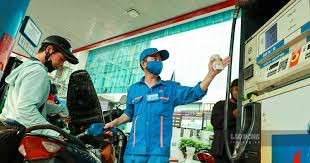
For consumers in Vietnam, the retail prices of popular petroleum products as of July 20, 2026, are as follows:
When compared to neighboring countries as of July 16, 2026, Vietnam's fuel prices are notably lower. For instance, gasoline prices in Thailand are at 27,391 VND per liter (government-subsidized), Cambodia at 25,354 VND per liter (also subsidized), Laos at 42,648 VND per liter, and China at 29,175 VND per liter (government-controlled). Diesel prices are similarly lower in Vietnam compared to its regional counterparts.