Vietnam's Automotive Market Sees Growth in Early 2026
The automotive industry in Vietnam has experienced significant growth in the first half of 2026, with total
The Japanese automotive industry is taking significant steps to address the pressures posed by the electrification trend and the growing dominance of Chinese car manufacturers. In response, major Japanese automakers are considering a large-scale standardization of components to boost competitiveness and reduce production costs. This strategy will allow them to allocate more resources to developing new technologies that meet consumer demands.
Historically, Japanese car manufacturers have shared components to save costs, not only within their own brands but also across different brands and segments. The MQB platform from Volkswagen, introduced in the 2010s, has become a model for this trend. Many manufacturers have since reduced the number of vehicle platforms to achieve more cost-effective and consistent production. However, this approach has faced criticism, particularly towards Volkswagen, for producing models that are too similar.
According to Automotive News, the Japanese automotive sector is now looking to expand this standardization beyond just brands within the same group, to include collaboration among various manufacturers. Notable past collaborations include BMW and Toyota's joint development of the Z4 and Supra, as well as Mazda and Fiat's partnership on the Fiat 124 Spider, based on the Mazda MX-5. However, the current plans being considered by Japanese automakers aim for a much broader scope.
Koji Sato, CEO of Toyota and Chairman of the Japan Automobile Manufacturers Association (JAMA), which includes major players like Honda, Nissan, Mazda, Subaru, Mitsubishi, and Suzuki, is at the forefront of this initiative. Sato emphasized the urgency for the Japanese automotive industry to undergo significant transformation and implement necessary reforms. He stated, "We recognize that the Japanese automotive industry is at a pivotal moment. It is time for the entire sector to innovate and make essential changes."
Sato, along with Nissan's CEO Ivan Espinosa, believes that standardizing components will enable manufacturers to focus more on technologies that truly matter to consumers, such as new software interfaces, advanced driving assistance systems, and faster-charging electric vehicles. Espinosa remarked, "We are discussing what we can do together, recognizing that many industries in other countries are better organized. We will see more collaboration among Japanese automakers in the near future."
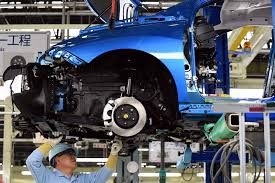
This collaboration will initially target components that consumers typically do not see, such as wiring harnesses, fluid conduits, and other technical details, rather than more visible parts like body panels or chassis. Sato did not mention the possibility of manufacturers sharing vehicle platforms or body structures, although the automotive industry has seen joint development platforms in alliances or post-merger scenarios. For example, Chrysler's LX platform was designed to be compatible with various components from Mercedes and the Daimler Sprinter van, despite originating from Chrysler's LH platform.
While standardizing components can reduce costs and simplify production, it also risks diminishing the unique characteristics of vehicles. For car enthusiasts, the increasing similarity among models may not be appealing. However, the use of shared components can benefit consumers and repair shops by making it easier to find replacement parts when repairs are needed. Overall, the advantages and disadvantages of this trend remain a topic of debate. Financial experts suggest that this could be an effective solution for automakers to cut costs.