Su-57 Fighter Jet Fails to Protect Omsk Oil Refinery from Drones
The Russian Su-57 fighter jet was deployed during a recent drone attack on the Gazpromneft-ONPZ oil refinery
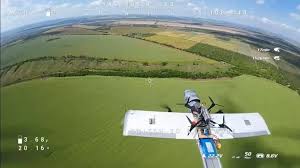
Ukraine has reported the successful interception of a new autonomous drone variant from Russia, equipped with artificial intelligence (AI). The Russian Molniya UAV, which cannot be jammed by electronic warfare, was shot down in a coordinated operation involving local police and the National Guard in Zaporizhia.
This incident marks the first confirmation by Ukraine of successfully downing an AI-equipped variant of the Molniya drone. Ivan Fedorov, head of the Military Administration of Zaporizhia, announced the news, highlighting the increasing shift in Russia's tactics towards using autonomous drones and cable-controlled UAVs. This transition aims to mitigate Ukraine's electronic warfare advantages, which have been crucial in balancing the drone warfare landscape.
The standard Molniya drone, a low-cost kamikaze UAV made from plywood and simple components, has a reported operational range of up to 40 kilometers. Typically, it requires a human operator and radio control, both of which can be disrupted by Ukraine's jamming and detection systems. However, the AI variant eliminates these components, relying solely on an onboard camera and integrated computer for navigation, target acquisition, and final attack execution.
The absence of a control antenna means there is no connection with an operator to sever, nor does it emit radio signals that could be intercepted by Ukraine’s electronic warfare systems. Serhii “Flash” Beskrestnov, an advisor to Ukraine's Minister of Defense on electronic warfare, noted that the downed UAV was equipped with a self-destruct mechanism that activates when the UAV's cover is opened, preventing it from being analyzed if captured.
The AI-equipped Molniya drone features a small radar cross-section, low infrared signature, and nearly silent electronics, making it difficult to detect until it is very close to its target. The interception of this UAV was achieved using domestically produced counter-drone systems named General Cherry AIR and Bullet.
The Molniya is one of the cheapest weapons in Russia's arsenal, with high reliability and widespread use. Reports indicate that Russia launches up to ten of these drones daily in the Zaporizhia direction, some fitted with anti-tank mines while others serve as “motherships” carrying smaller FPV drones.
Preliminary assessments suggest that the 50th Varyag Drone Brigade of Russia is the primary operator of this AI variant, working alongside the Rubicon forces, units typically used by Russia to test the latest UAV technologies on the Zaporizhia front.
Beskrestnov warned that this may not be the final development in UAV technology. The next iteration could involve a Molniya version using cable control, currently undergoing testing. This would eliminate radio signal emissions, making it undetectable by Ukraine's electronic reconnaissance systems and immune to electronic jamming.
As UAVs become increasingly autonomous or utilize cable control, the effectiveness of Ukraine's electronic warfare systems may diminish. Both Russia and Ukraine have begun testing AI-driven target selection systems in real combat conditions, prompting Ukraine to shift focus towards kinetic interception measures.